Algorand Developer Portal

Everything you need to build on Algorand

Official developer hub of Algorand, bringing together documentation, tutorials, learning paths, and ecosystem resources.

Results

✧ Information Architecture
Organized documentation, tutorials, and ecosystem content into a cohesive structure.
↑ Discoverability
Reduced fragmentation and improved access to technical and educational resources.
↑ Developer Onboarding
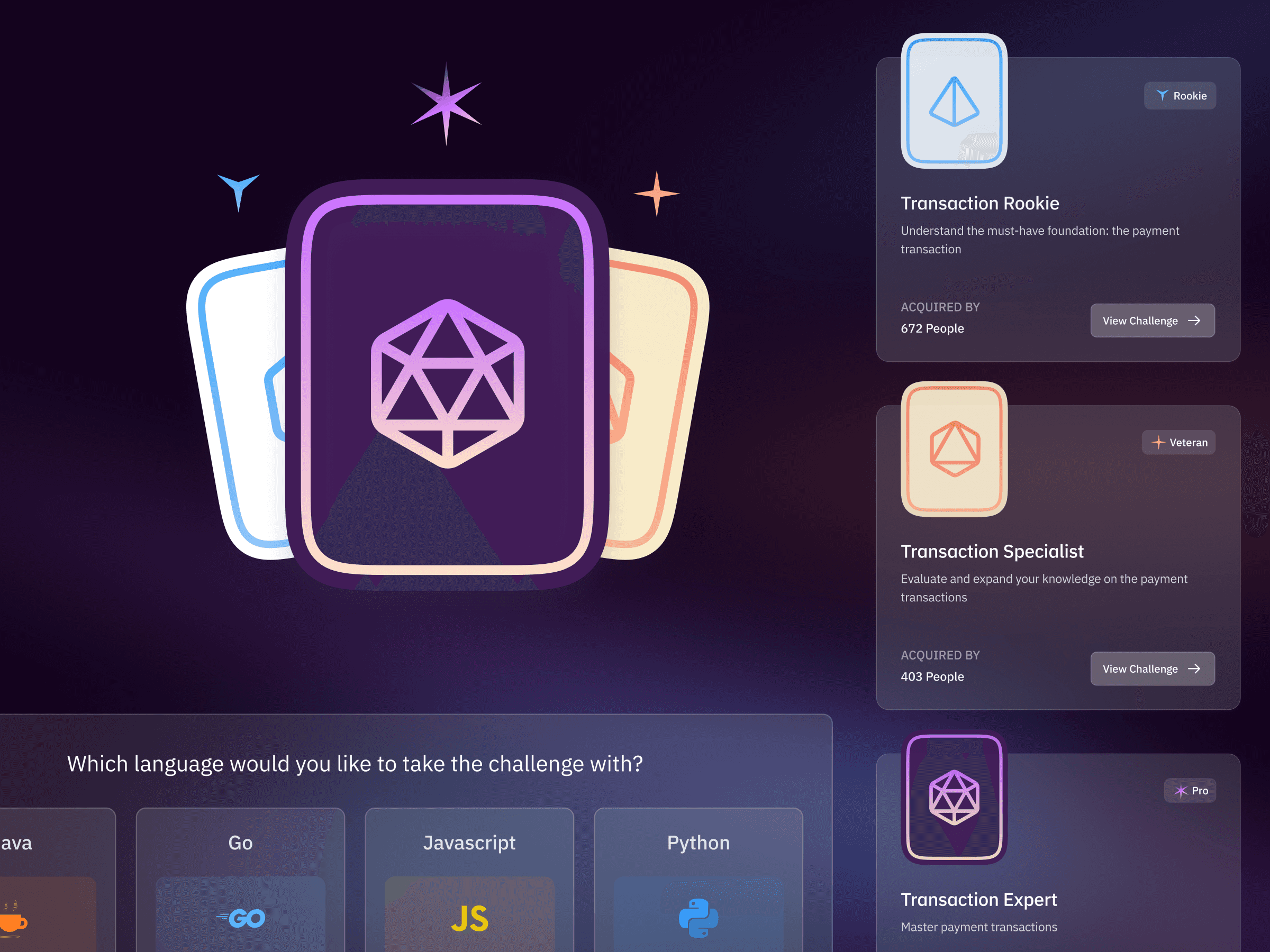
Designed structured learning paths supporting progressive skill development.
✧ Platform Foundation
Established a scalable experience aligned with Algorand’s evolving ecosystem.
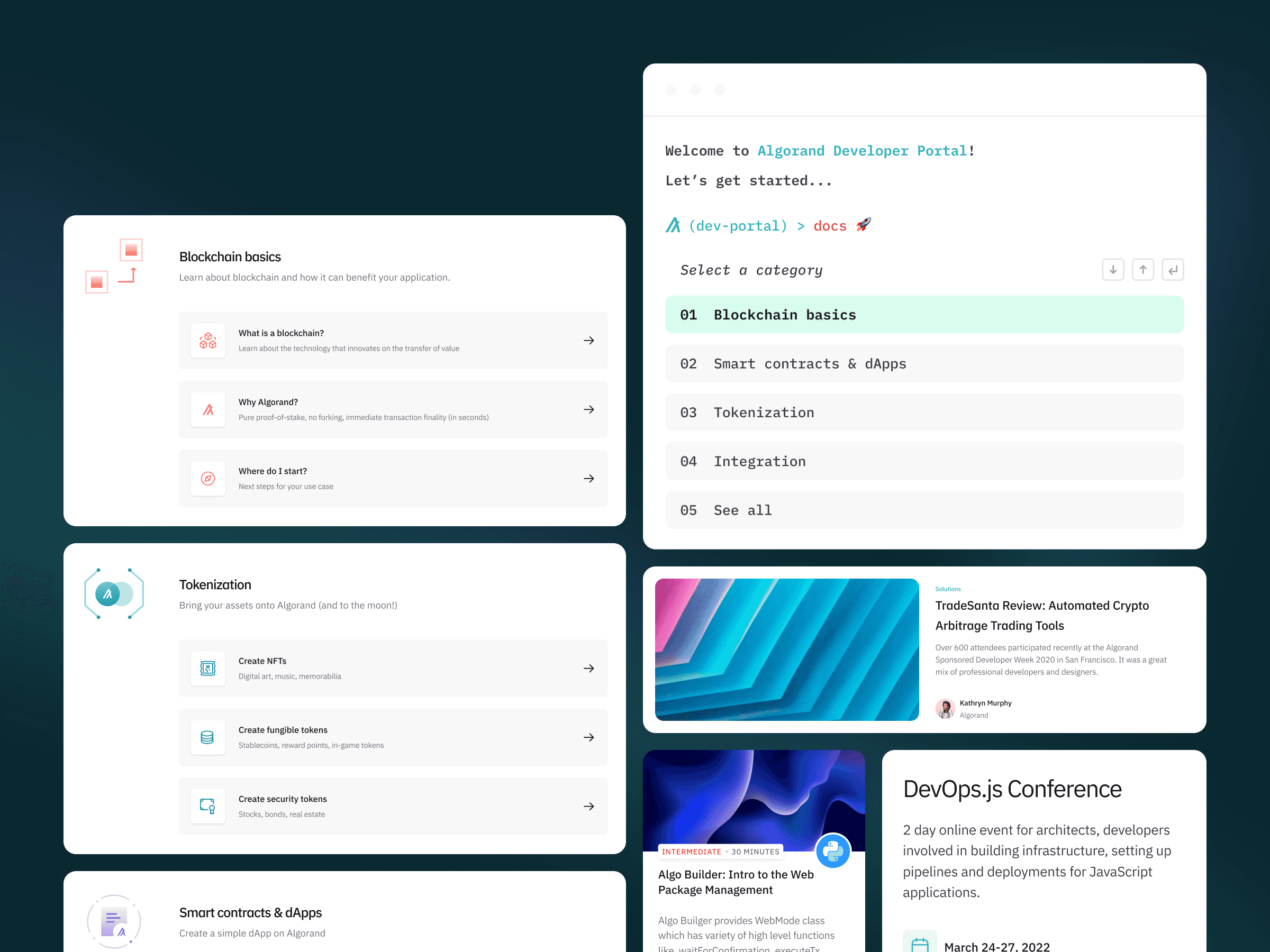
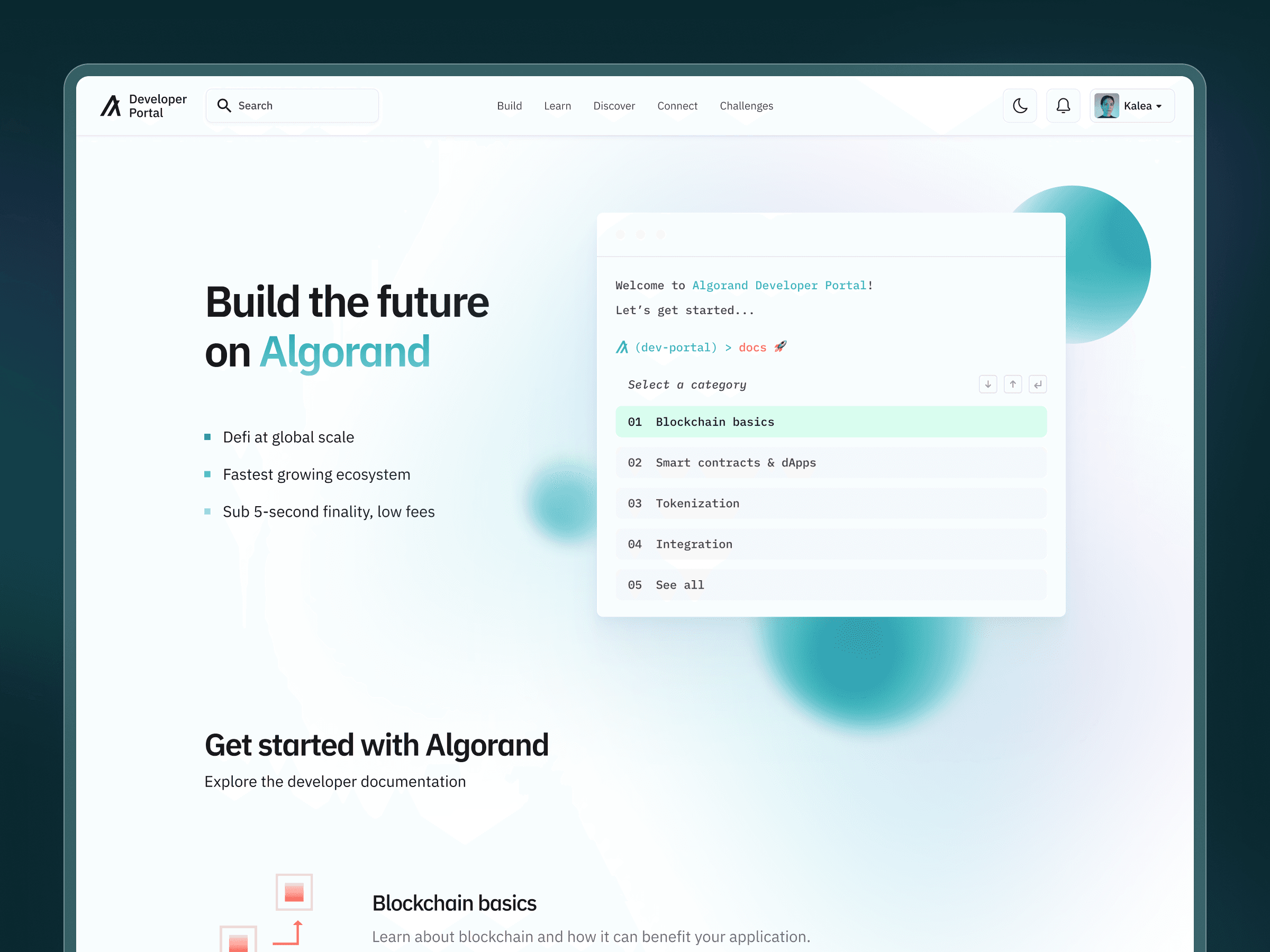
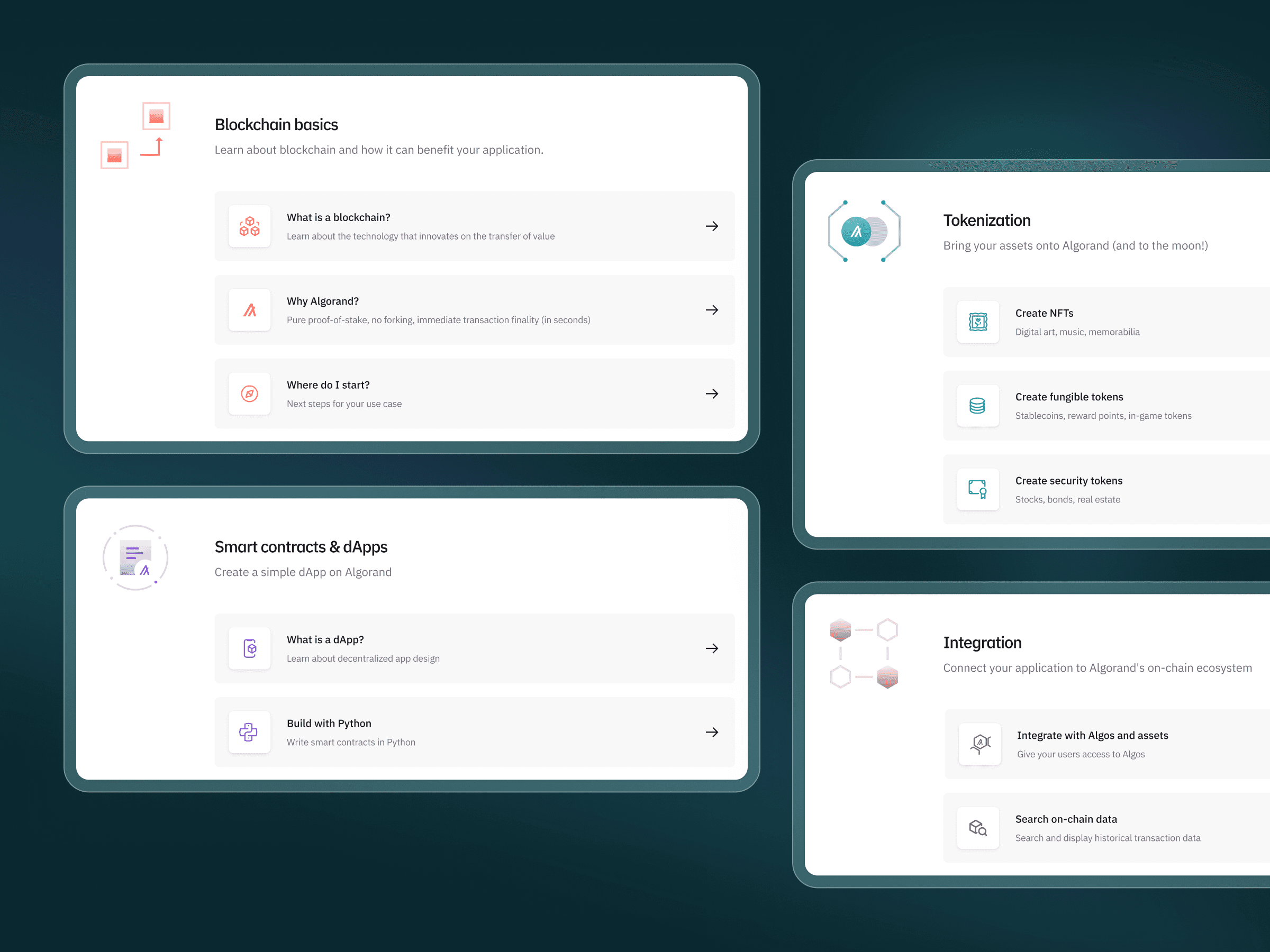
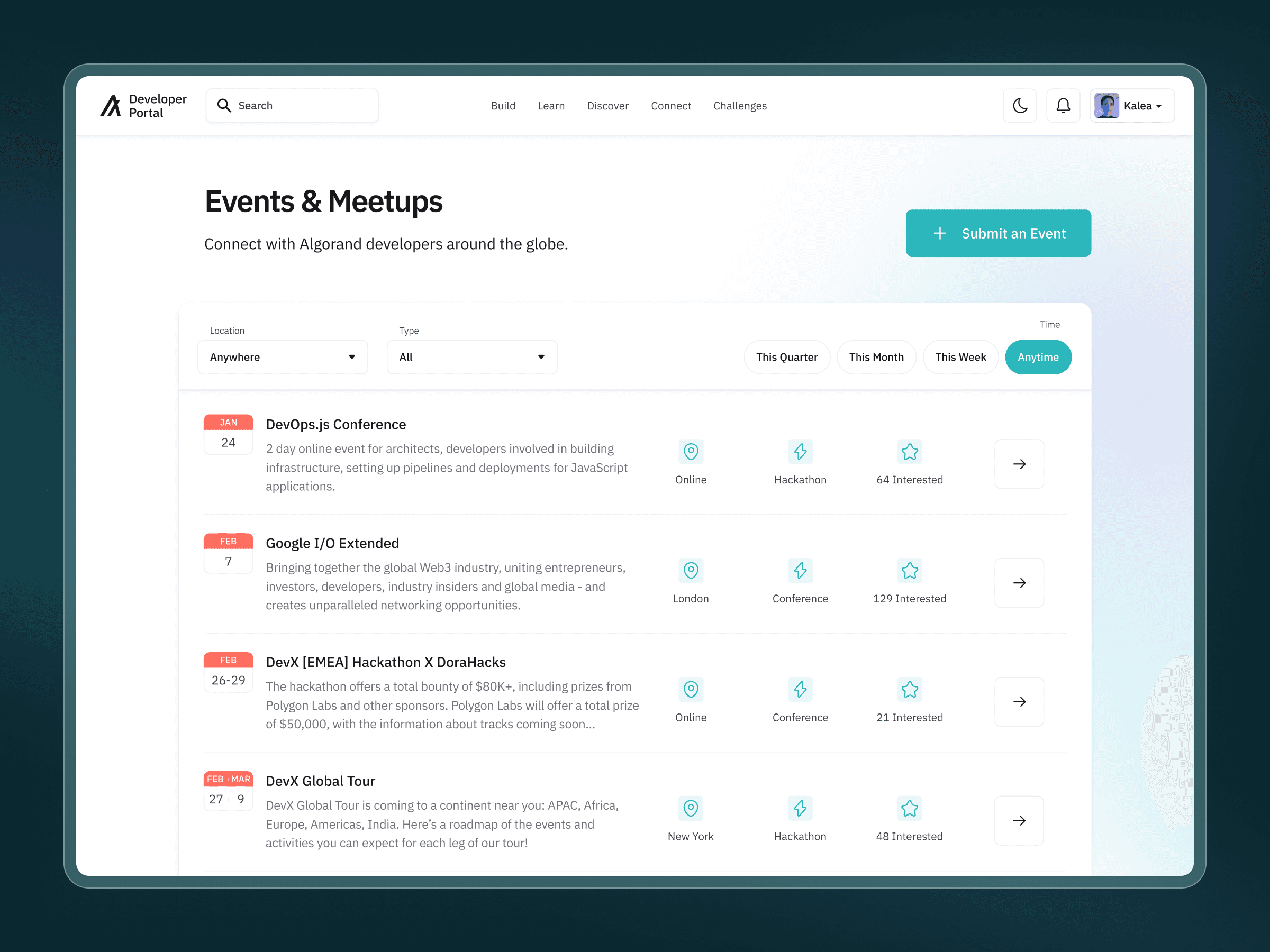
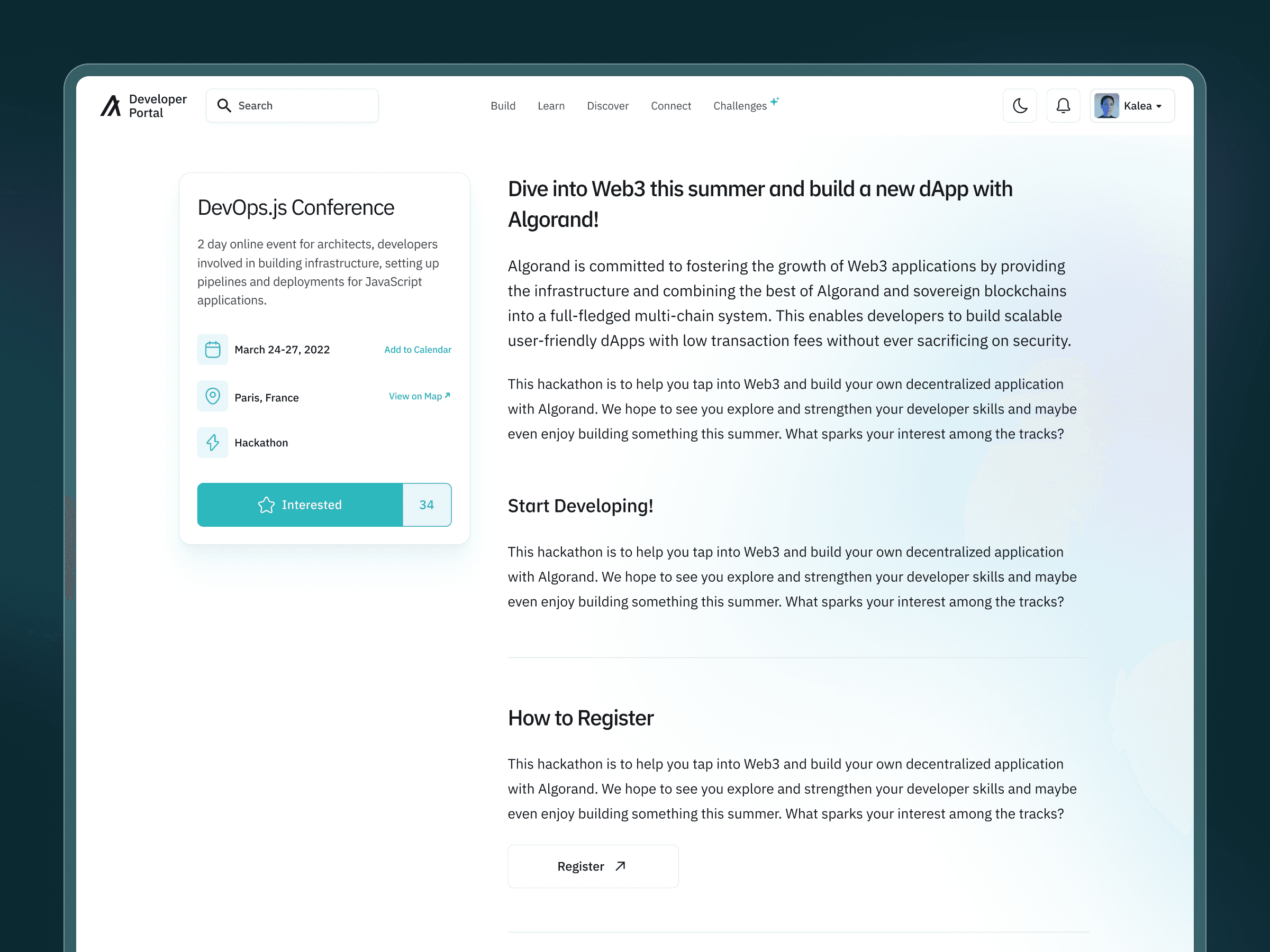
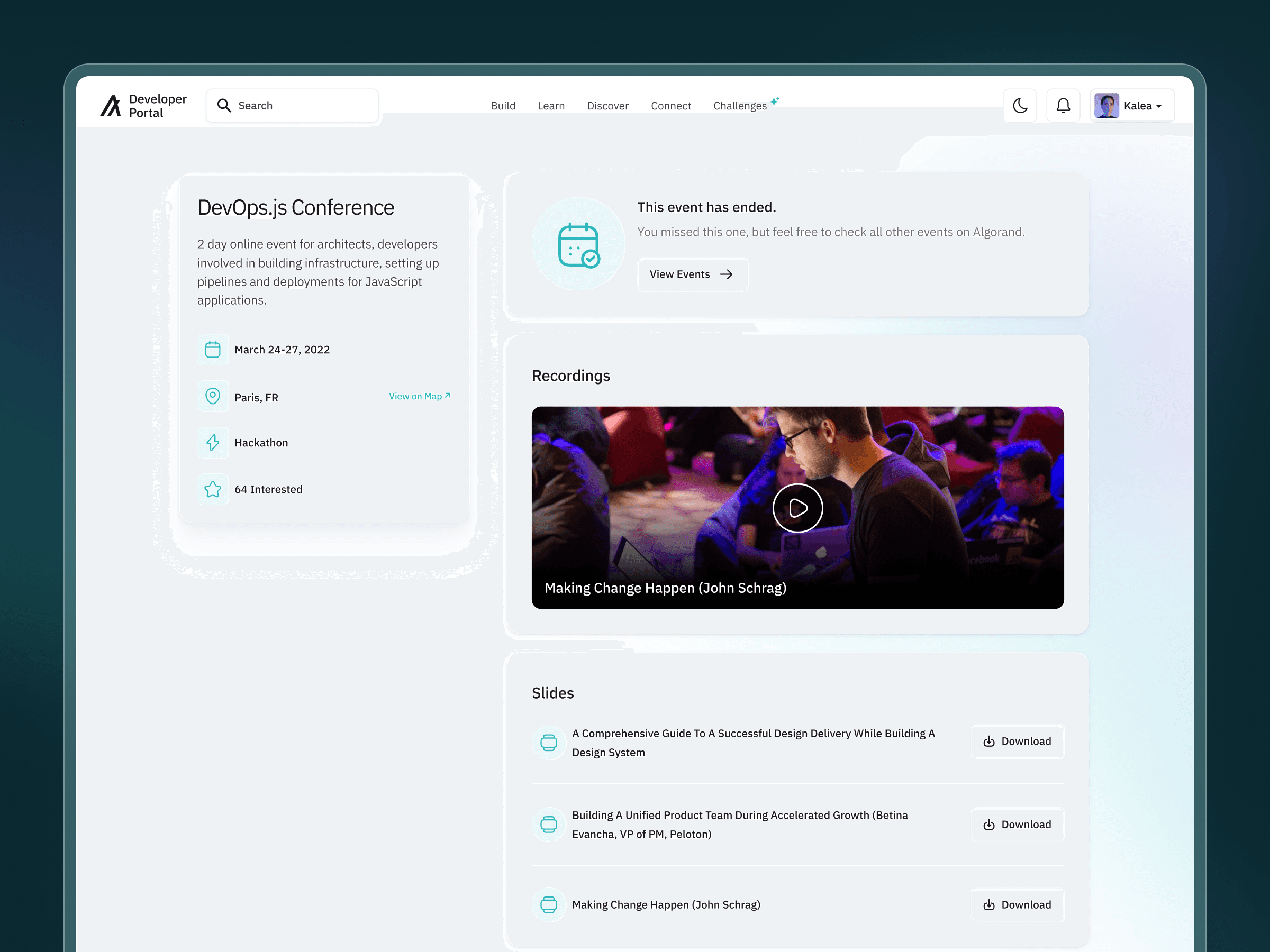
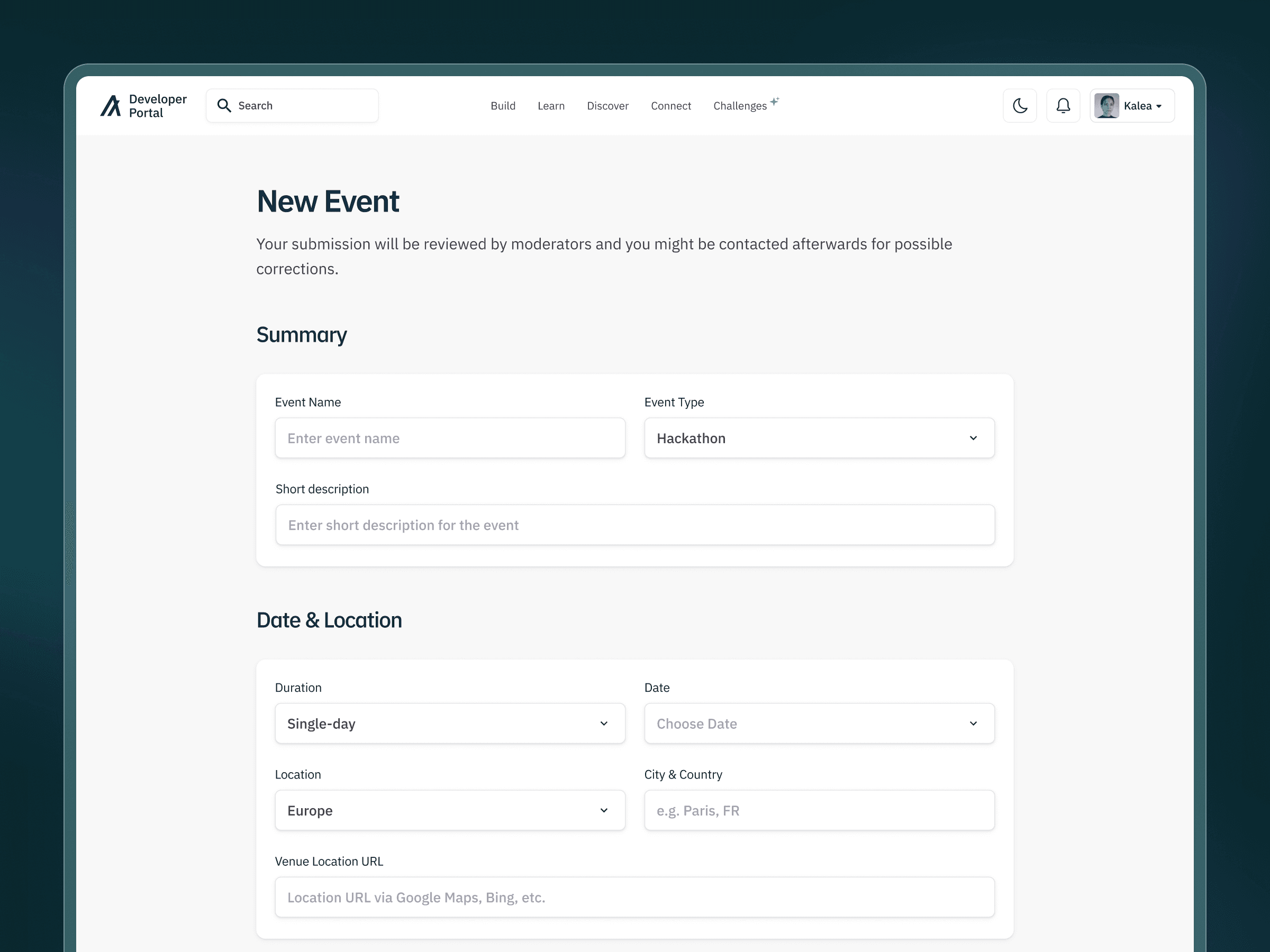
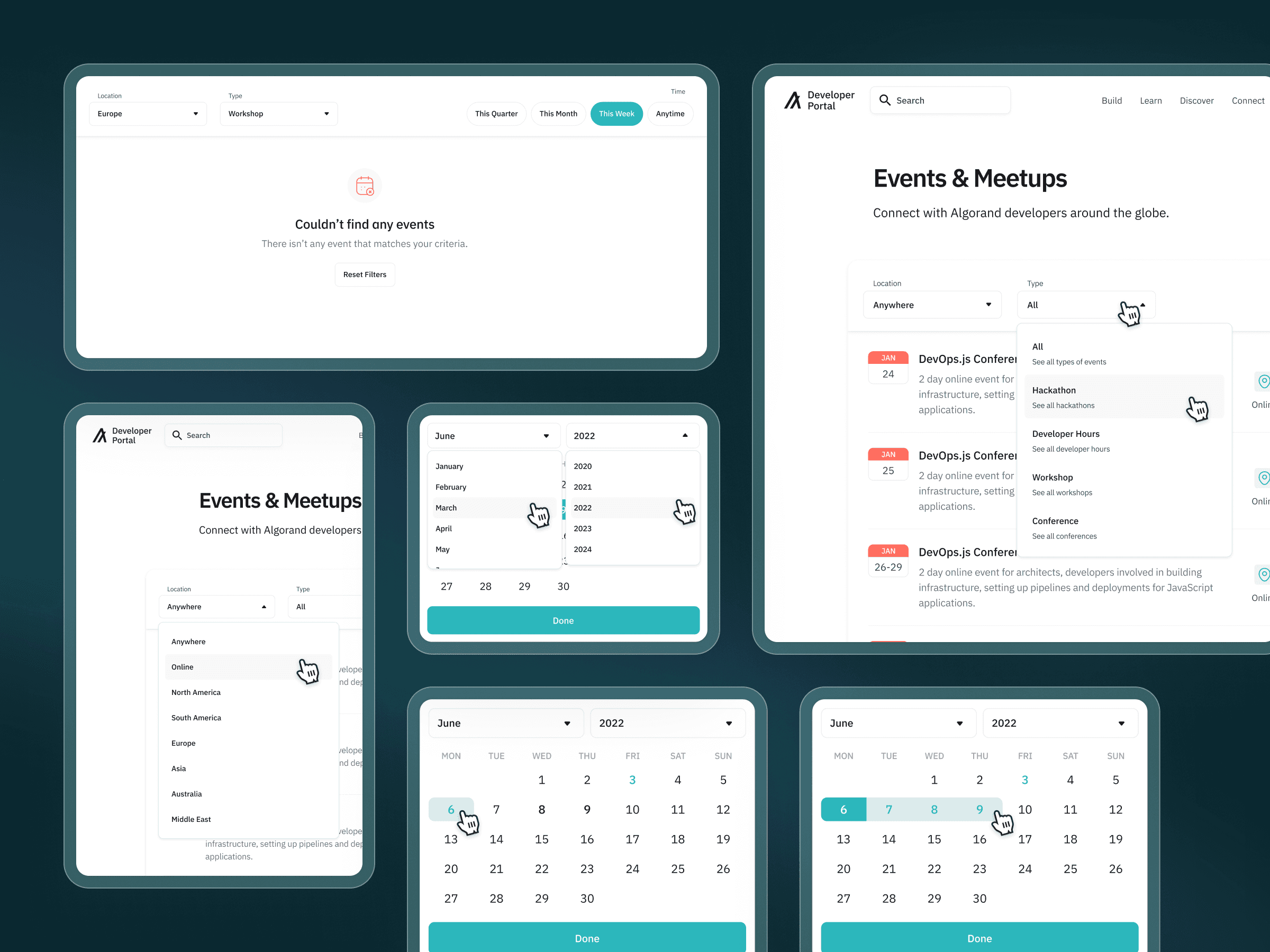
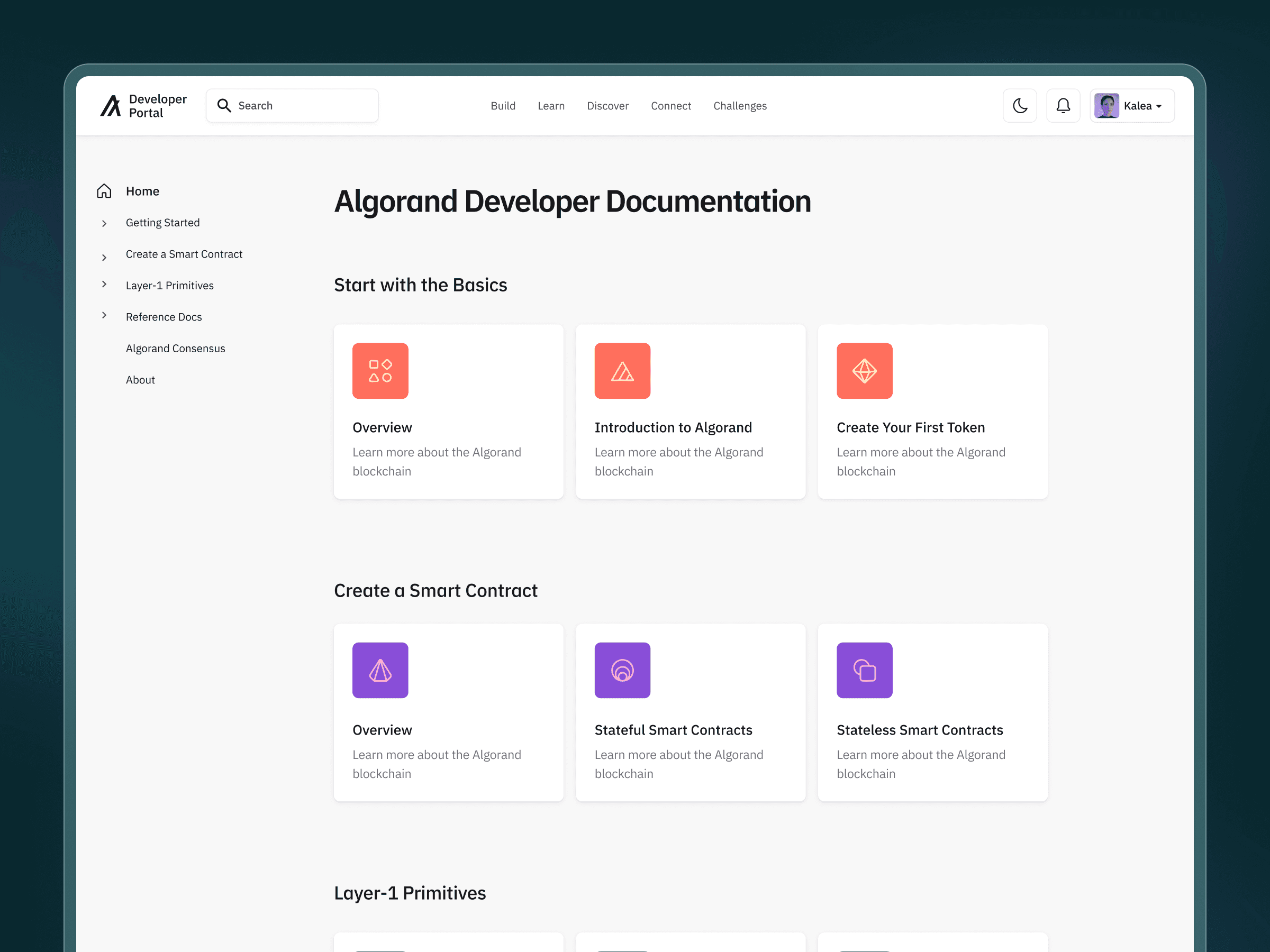
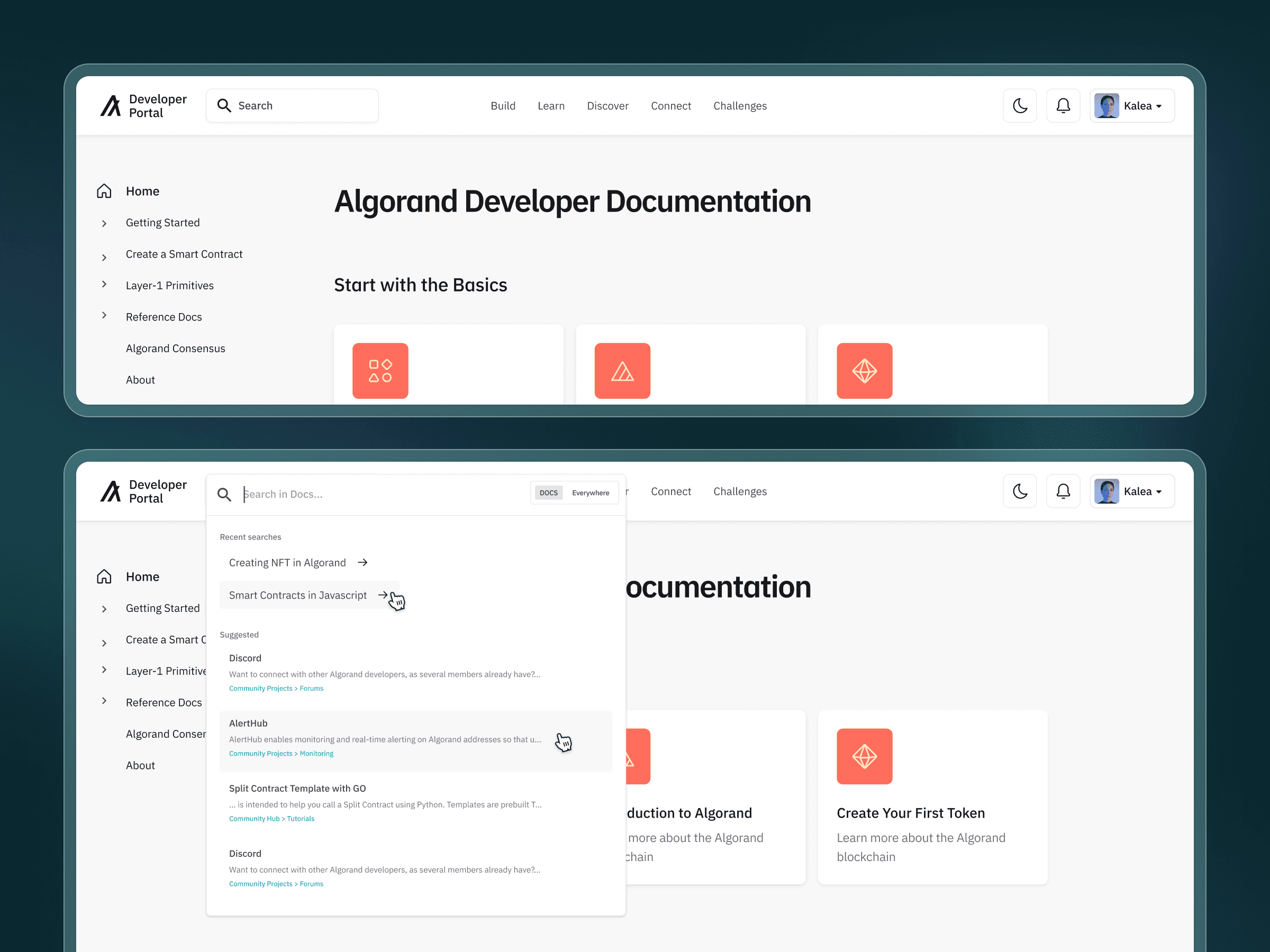
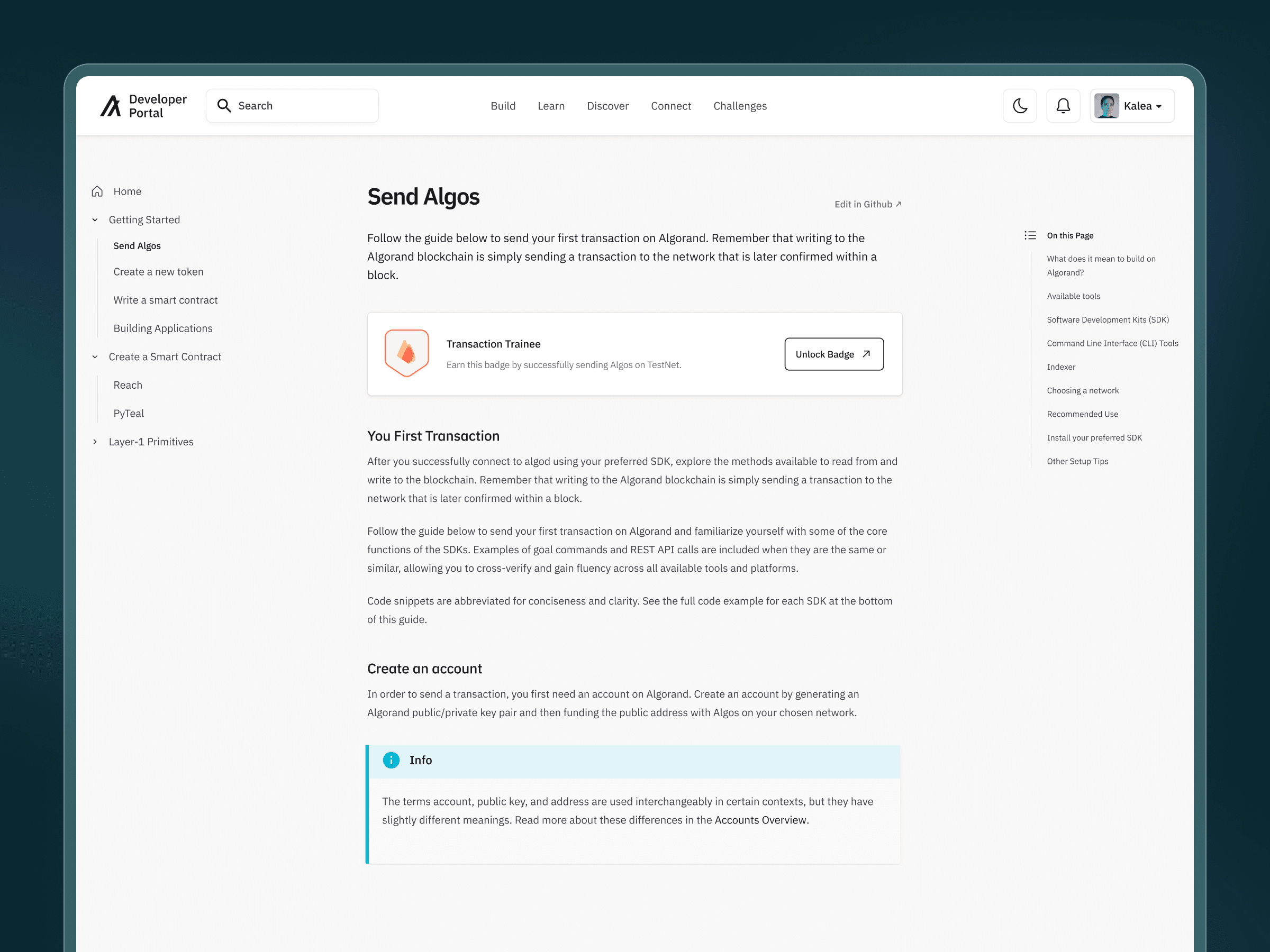
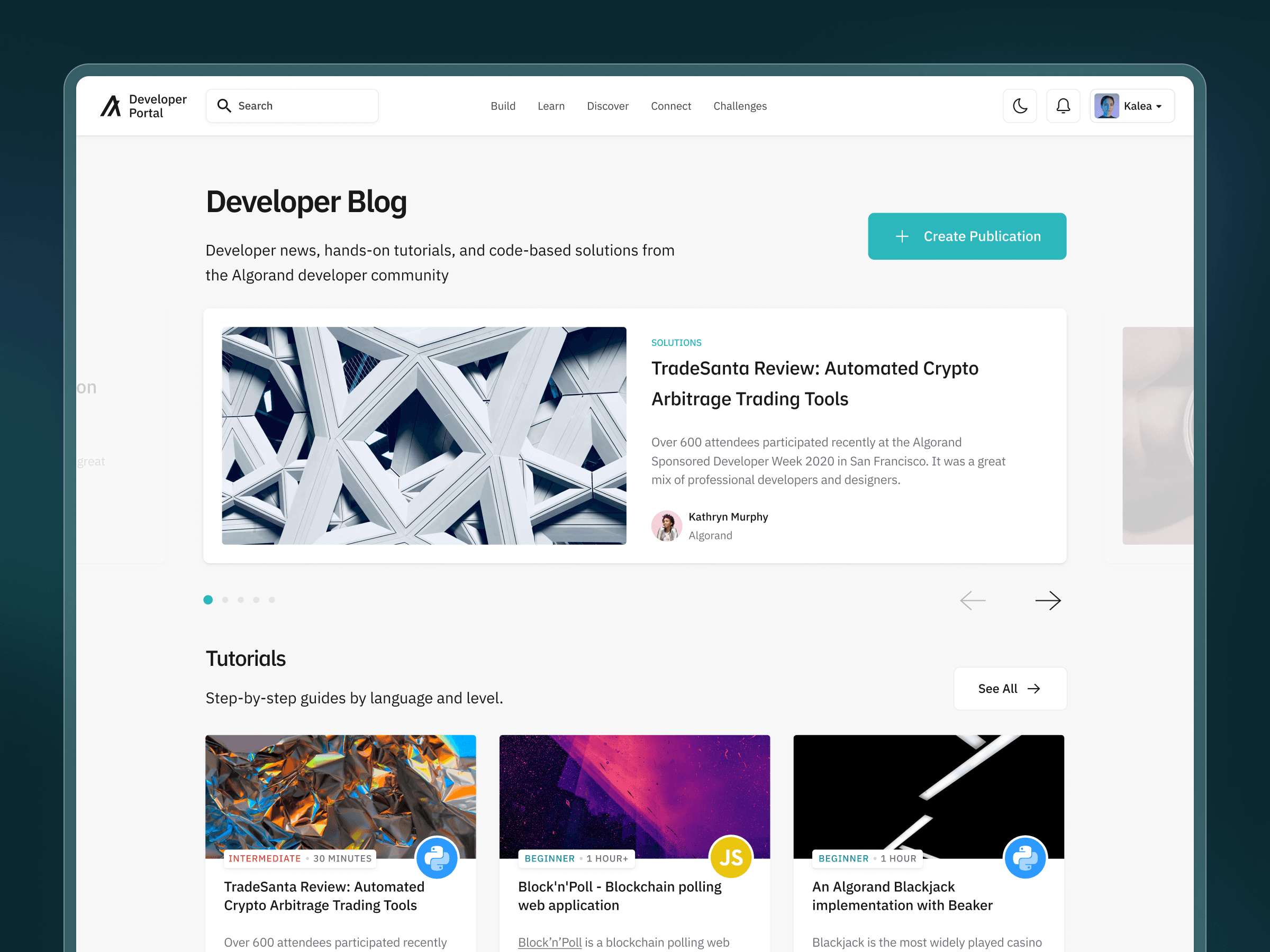
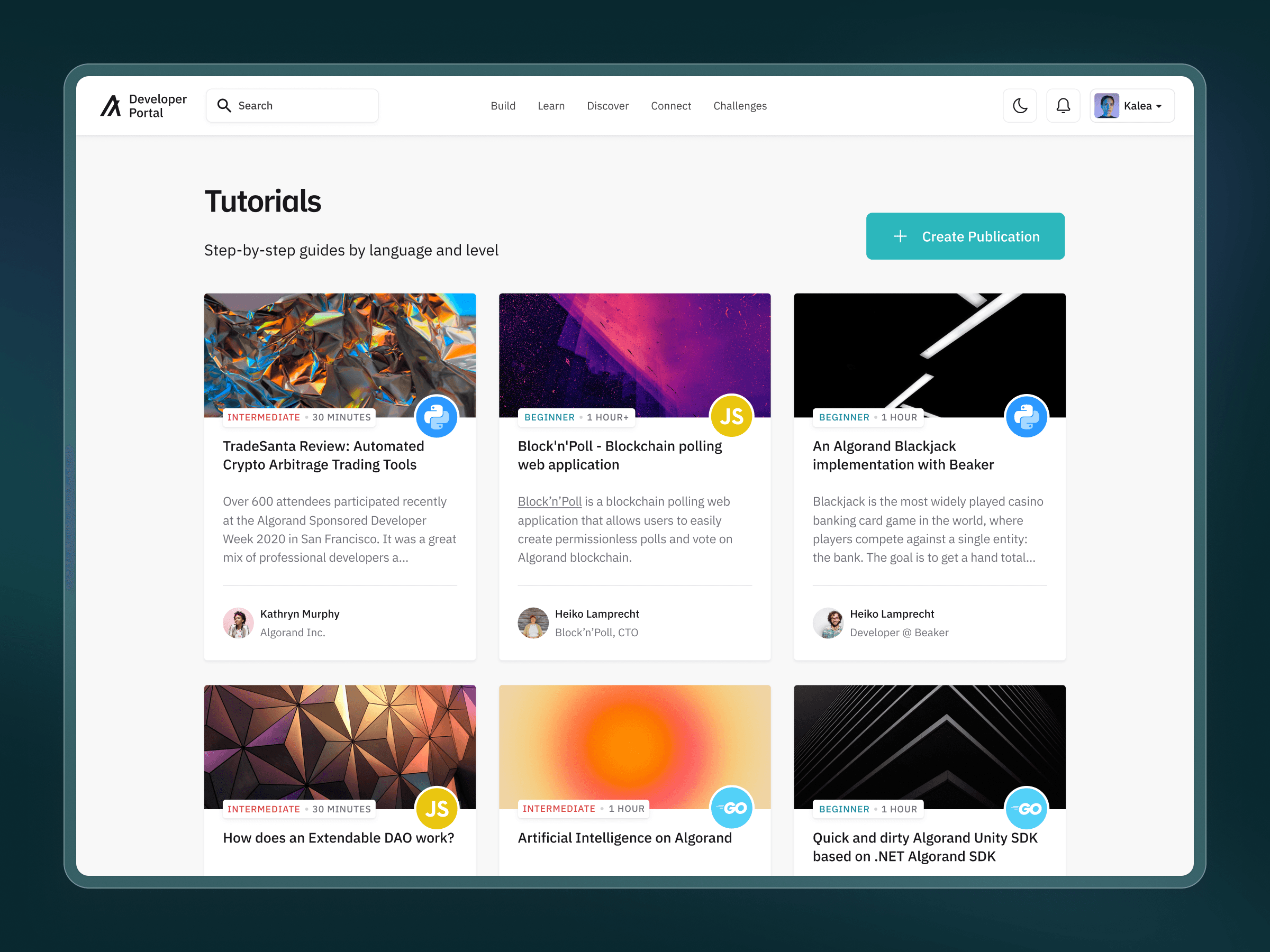
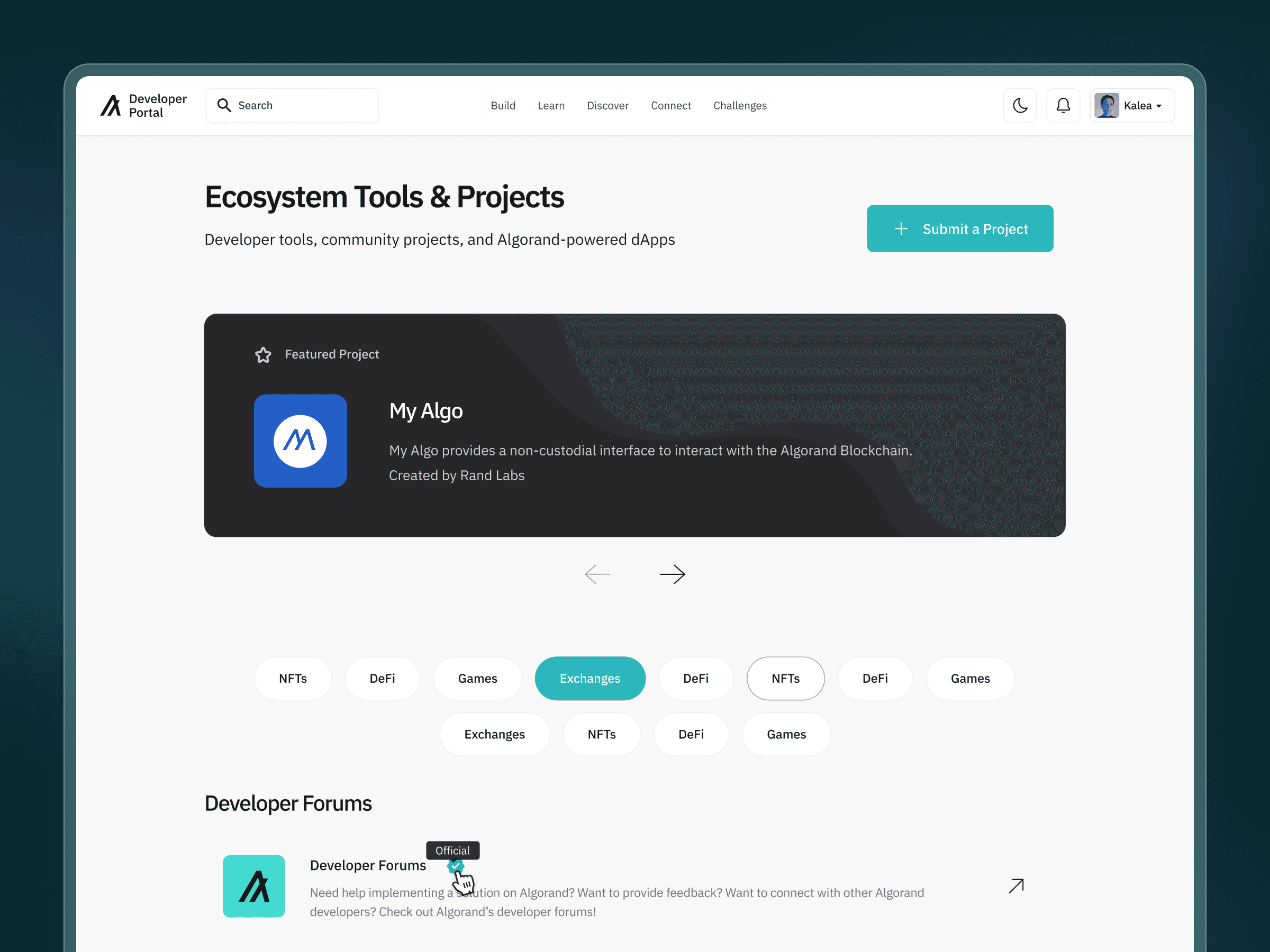
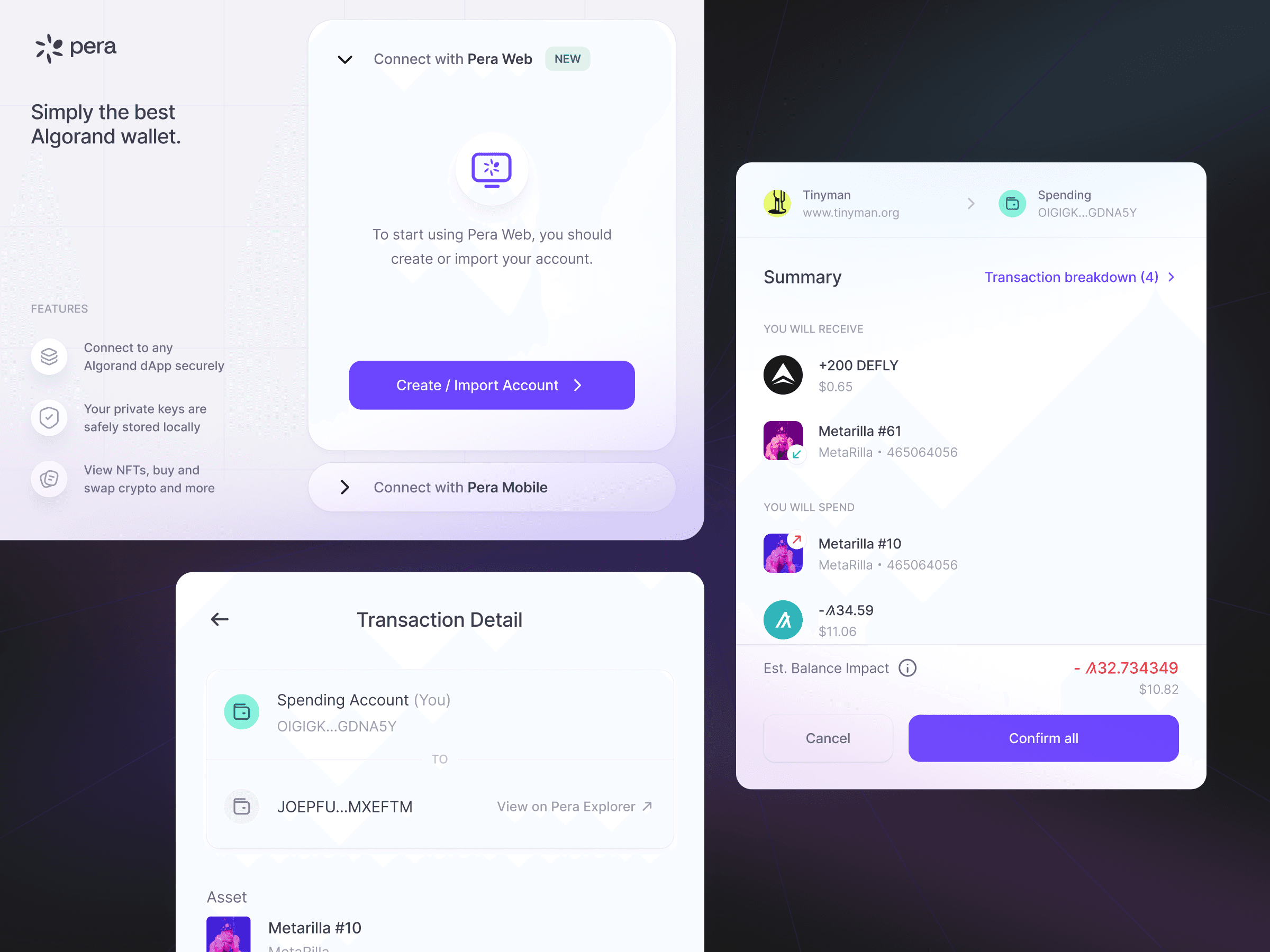
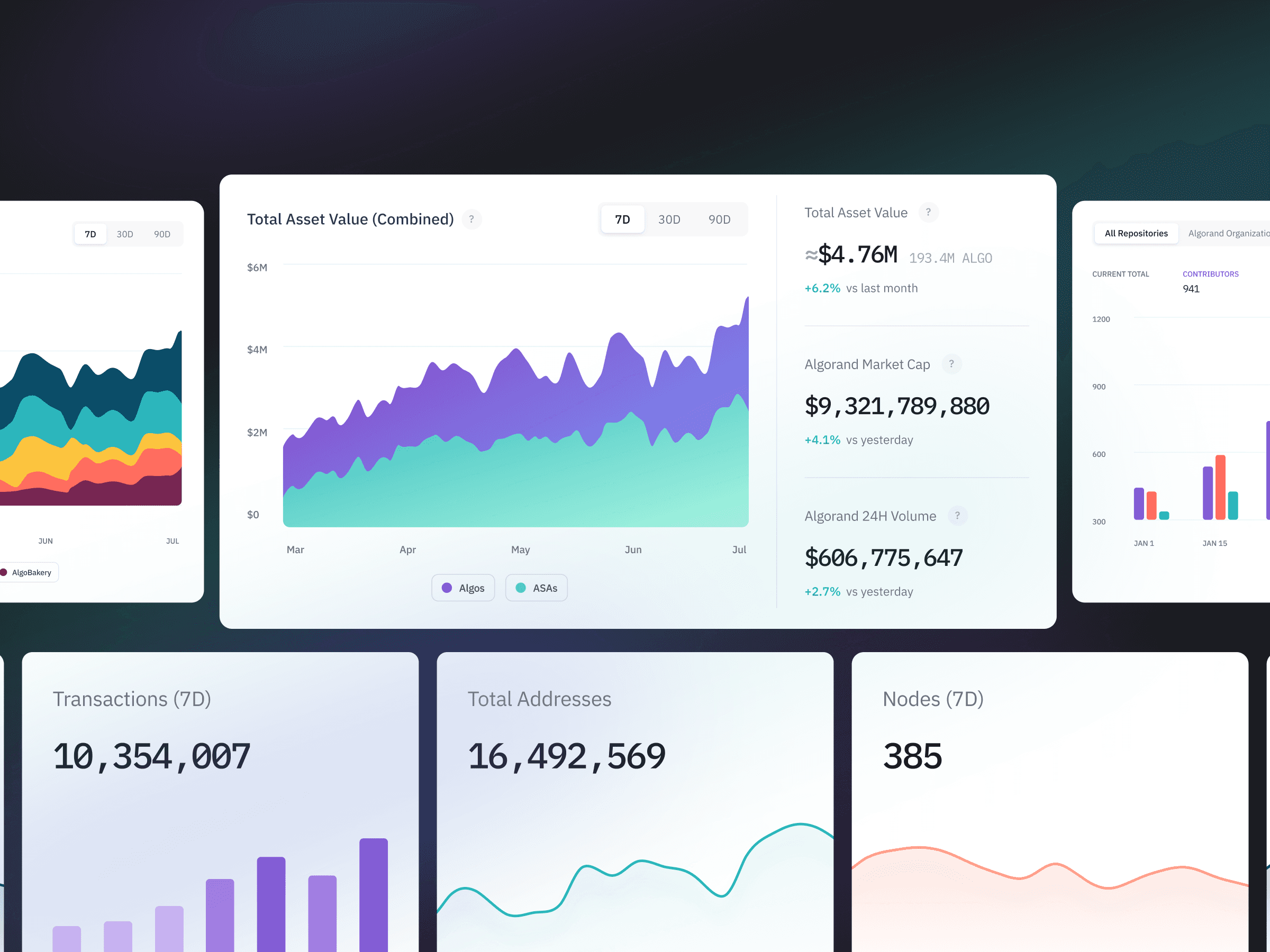
The Algorand Developer Portal is the official hub for developers building on Algorand. It centralizes documentation, tutorials, blog content, events, and ecosystem resources, serving as the primary entry point for technical audiences. As the sole designer on the project, I led the end-to-end design process in collaboration with the Algorand Foundation’s product teams. The scope included defining the portal’s information architecture, navigation system, layout principles, and core interaction patterns. While documentation was a key component, the goal was not to create a simple documentation wrapper. The portal needed to function as a structured learning environment that supported onboarding, skill progression, and long-term ecosystem engagement.

The Algorand Developer Portal is the official hub for developers building on Algorand. It centralizes documentation, tutorials, blog content, events, and ecosystem resources, serving as the primary entry point for technical audiences. As the sole designer on the project, I led the end-to-end design process in collaboration with the Algorand Foundation’s product teams. The scope included defining the portal’s information architecture, navigation system, layout principles, and core interaction patterns. While documentation was a key component, the goal was not to create a simple documentation wrapper. The portal needed to function as a structured learning environment that supported onboarding, skill progression, and long-term ecosystem engagement.

Design Rationale

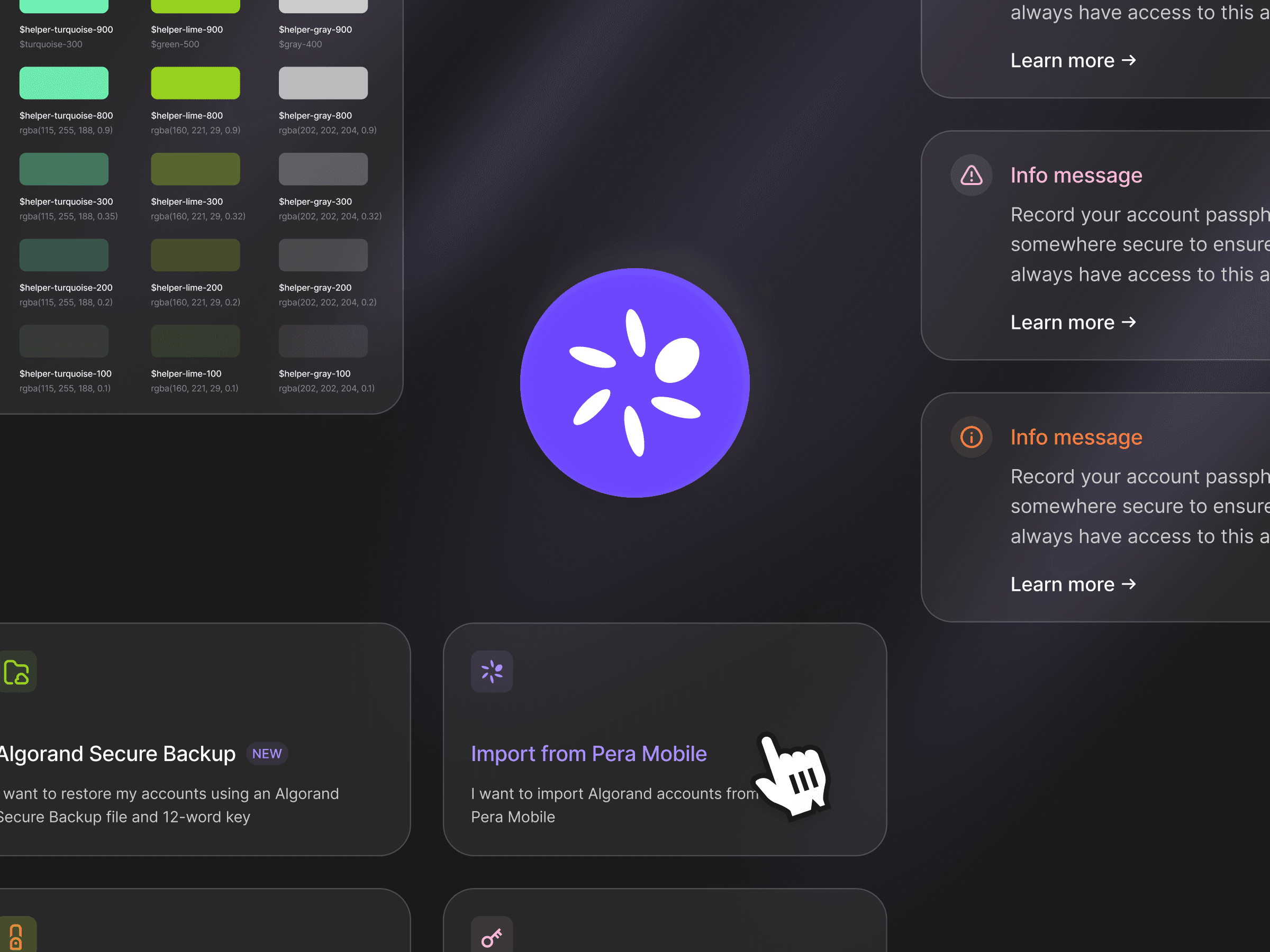
Developer portals often become fragmented over time. Documentation lives in one place, tutorials in another, blog posts elsewhere, and ecosystem updates scattered across different surfaces. This fragmentation increases cognitive load and weakens onboarding. I approached the portal as a layered system. The top level focused on orientation, helping developers quickly understand where they are and what to explore next. Learning paths and roadmap-style structures were introduced to guide users from beginner to advanced use cases without forcing them to manually piece together content. Navigation was designed around intent rather than content type. Instead of asking developers whether they wanted documentation, a tutorial, or a blog post, the structure supported goals such as getting started, building, or exploring ecosystem tools. This reduced decision fatigue and made progression more natural. A modern visual language with subtle micro-interactions reinforced clarity and responsiveness without distracting from technical content. The result was a portal that felt both structured and dynamic, balancing precision with approachability.

Developer portals often become fragmented over time. Documentation lives in one place, tutorials in another, blog posts elsewhere, and ecosystem updates scattered across different surfaces. This fragmentation increases cognitive load and weakens onboarding. I approached the portal as a layered system. The top level focused on orientation, helping developers quickly understand where they are and what to explore next. Learning paths and roadmap-style structures were introduced to guide users from beginner to advanced use cases without forcing them to manually piece together content. Navigation was designed around intent rather than content type. Instead of asking developers whether they wanted documentation, a tutorial, or a blog post, the structure supported goals such as getting started, building, or exploring ecosystem tools. This reduced decision fatigue and made progression more natural. A modern visual language with subtle micro-interactions reinforced clarity and responsiveness without distracting from technical content. The result was a portal that felt both structured and dynamic, balancing precision with approachability.

  • More Works

  • More Works

  • More Works

  • More Works

  • More Works

  • More Works

  • More Works

  • More Works

  • More Works

  • More Works

  • More Works

  • More Works

WANT TO SAY HI?

LET'S CHAT

WANT TO SAY HI?

LET'S CHAT

WANT TO SAY HI?

LET'S CHAT