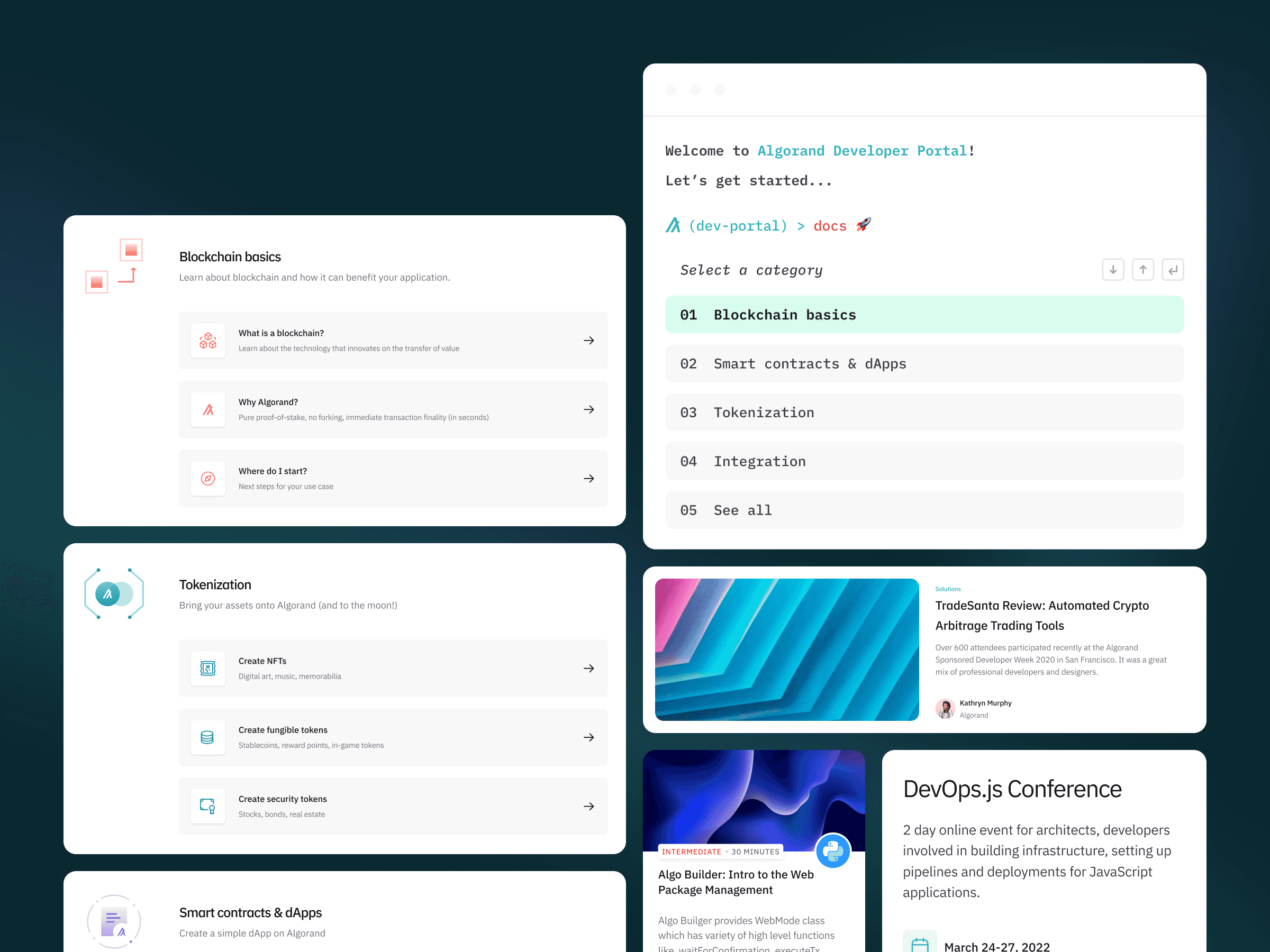
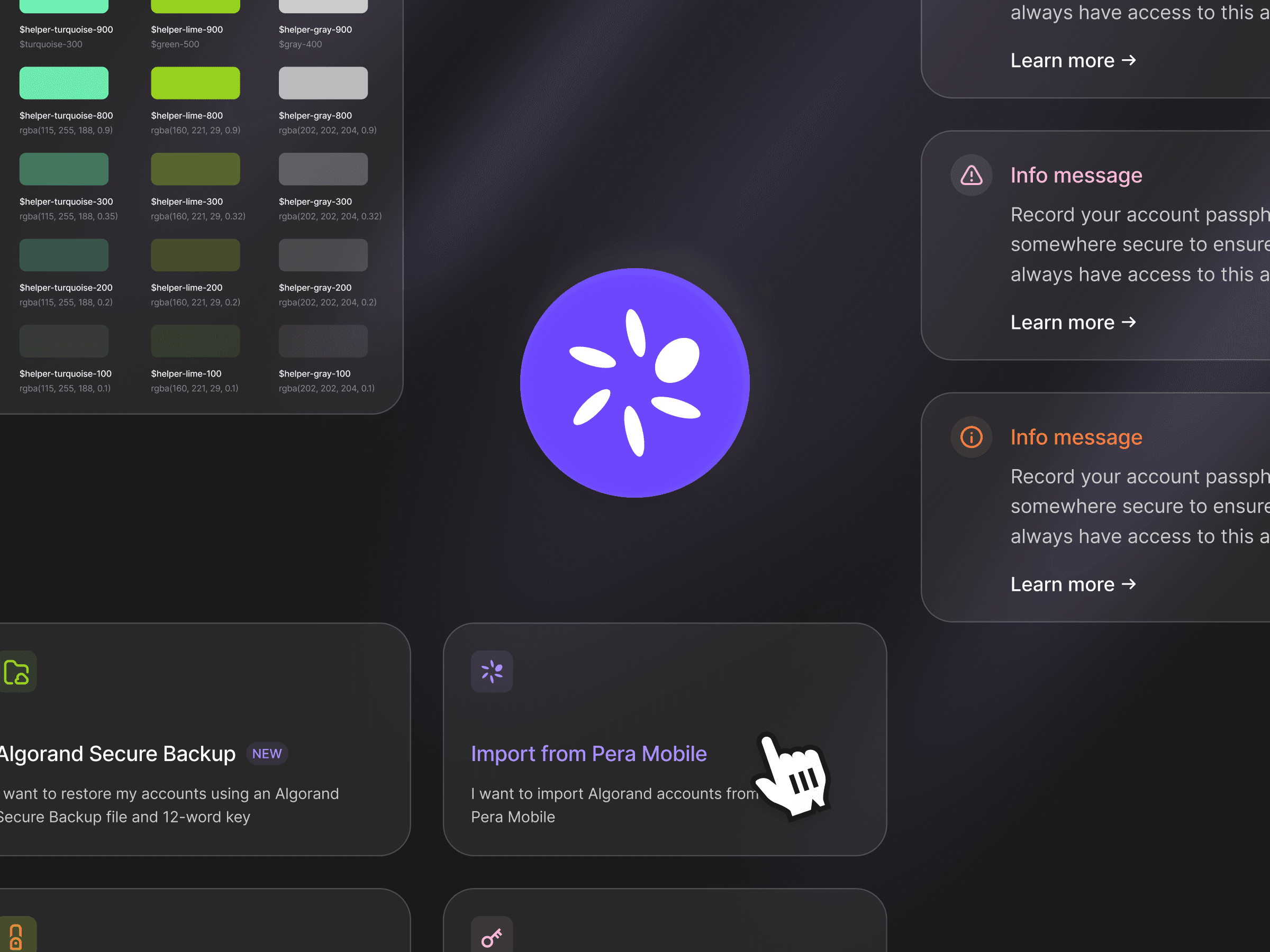
Algorand Metrics Dashboard

Official blockchain metrics of Algorand

Official chain analytics dashboard presenting Algorand’s performance through clear, structured, and time-based data exploration.

Results

✧ Metric Structuring
Translated complex blockchain data into clear, comparable visual models.
↑ Time Exploration
Enabled historical comparisons and filtered analysis across network metrics.
↑ Data Transparency
Clarified key indicators such as performance trends and ecosystem activity.
✧ Ecosystem Credibility
Delivered an official analytics surface aligned with infrastructure maturity.
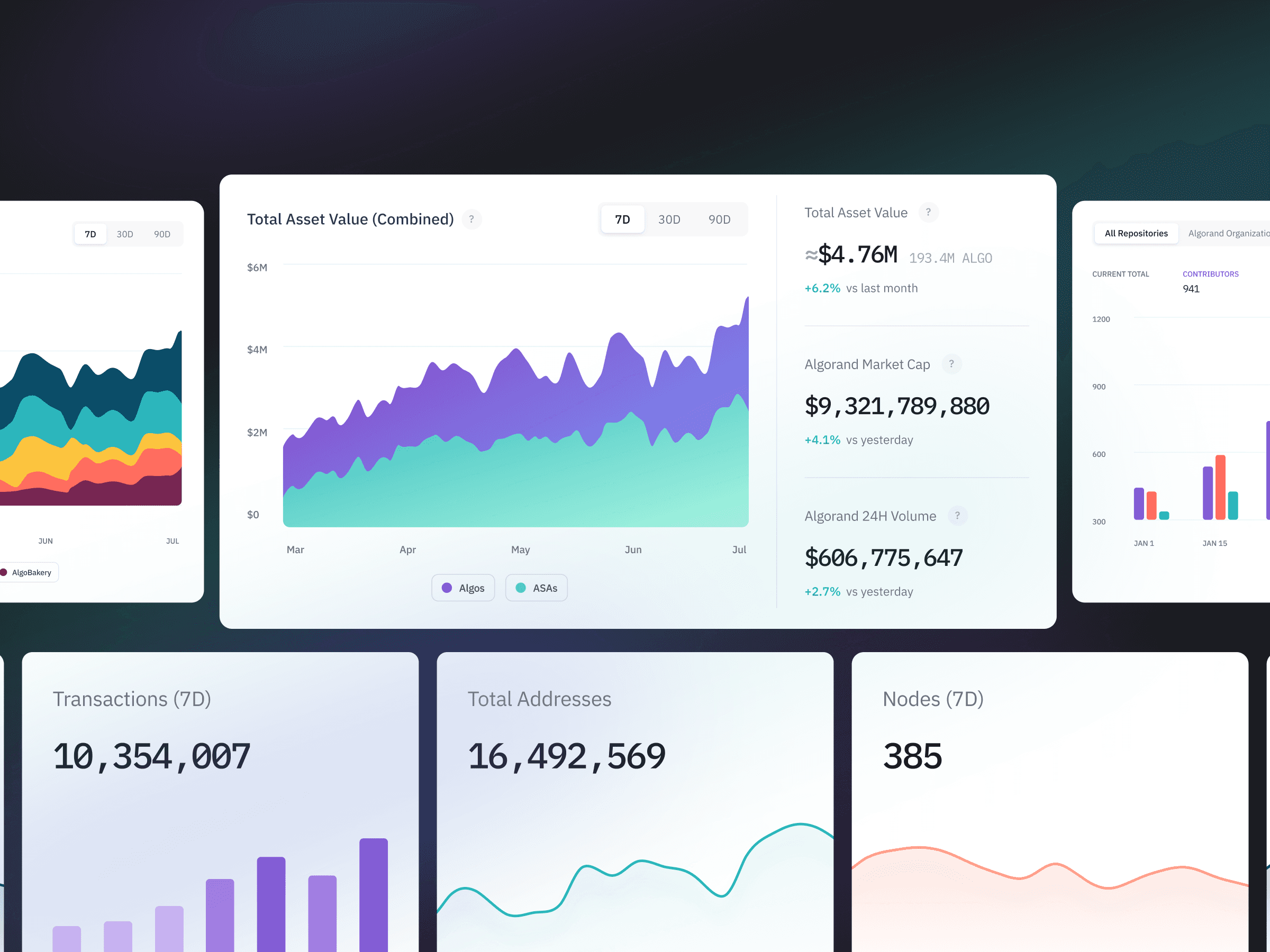
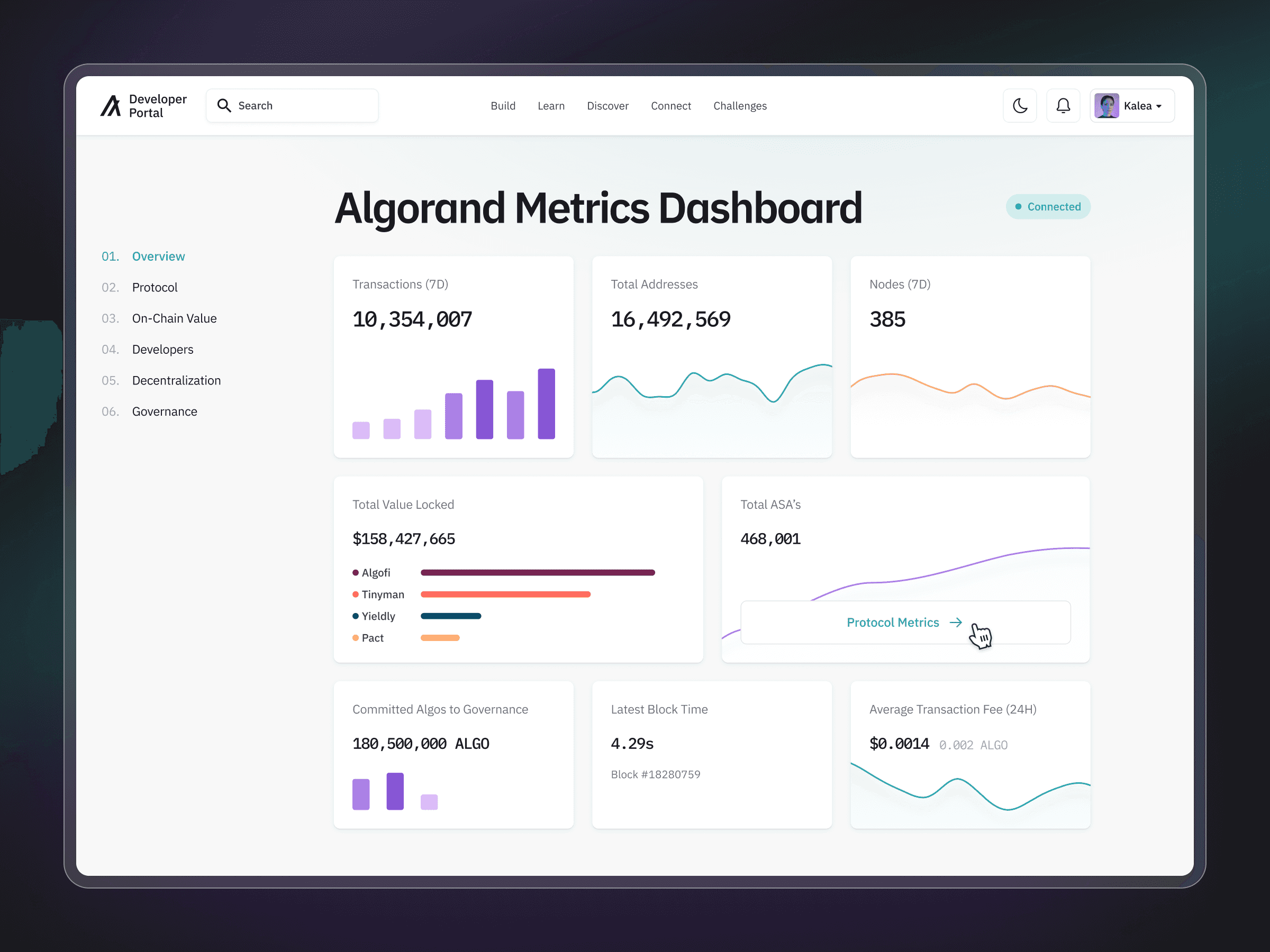
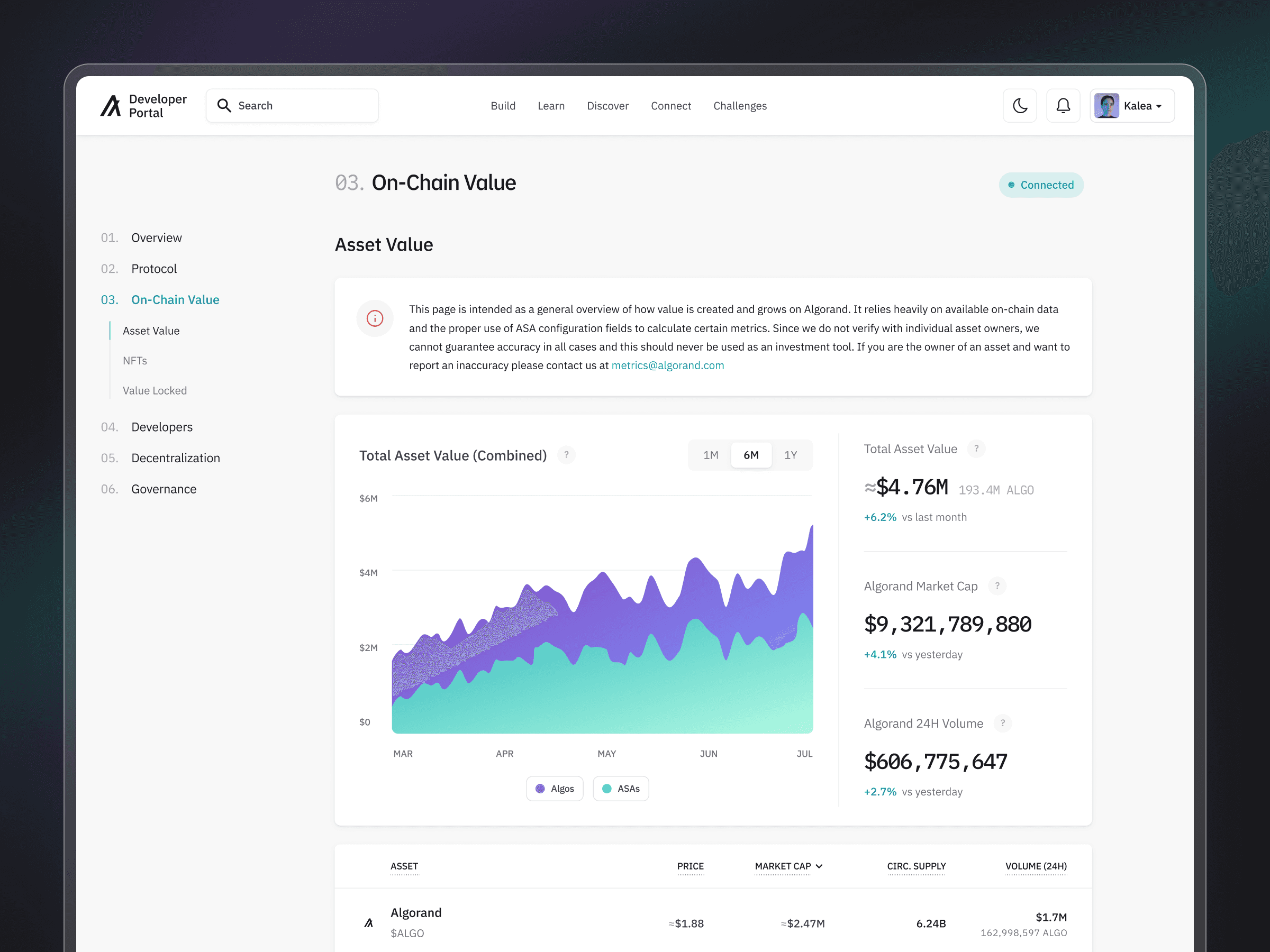
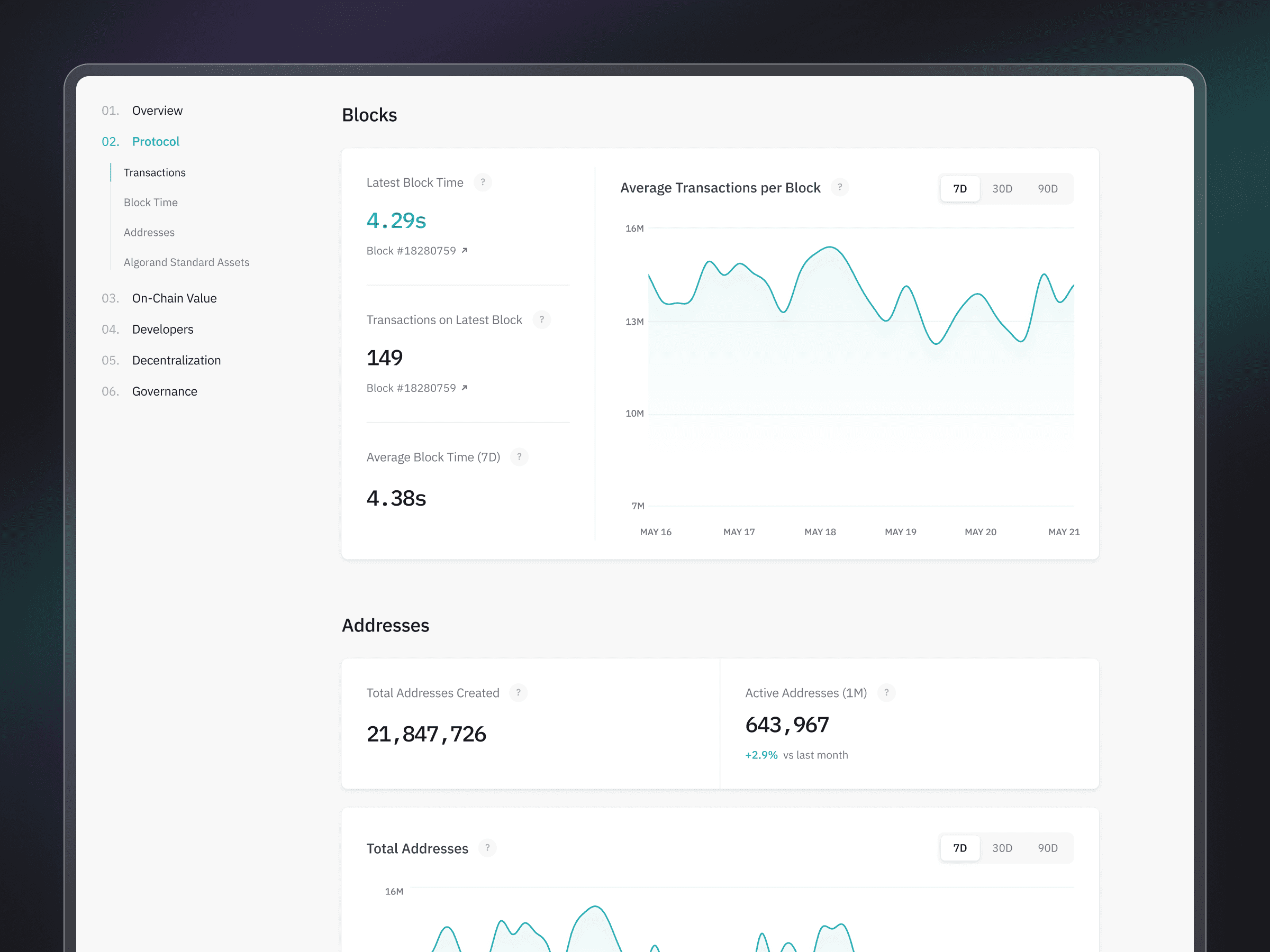
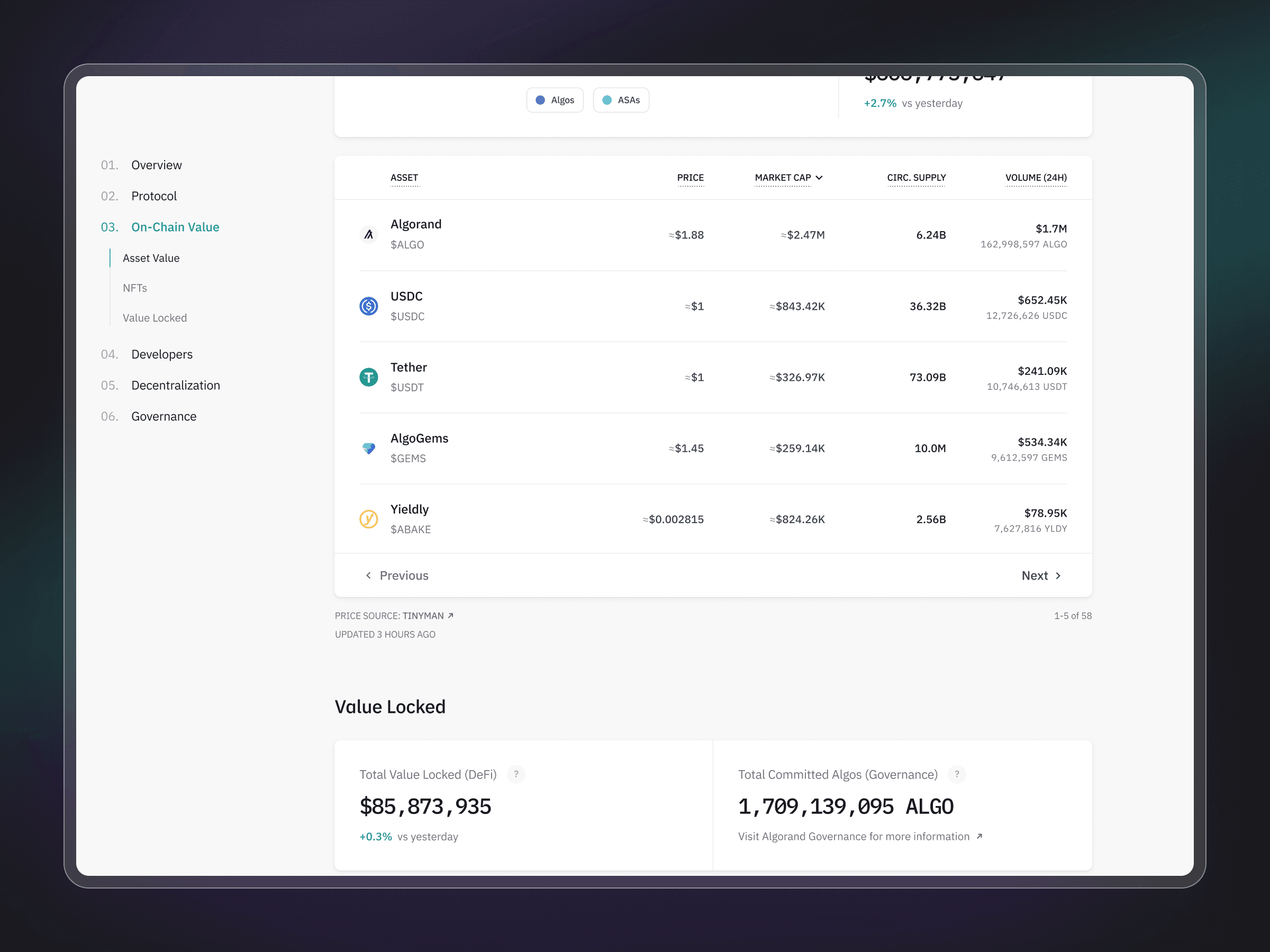
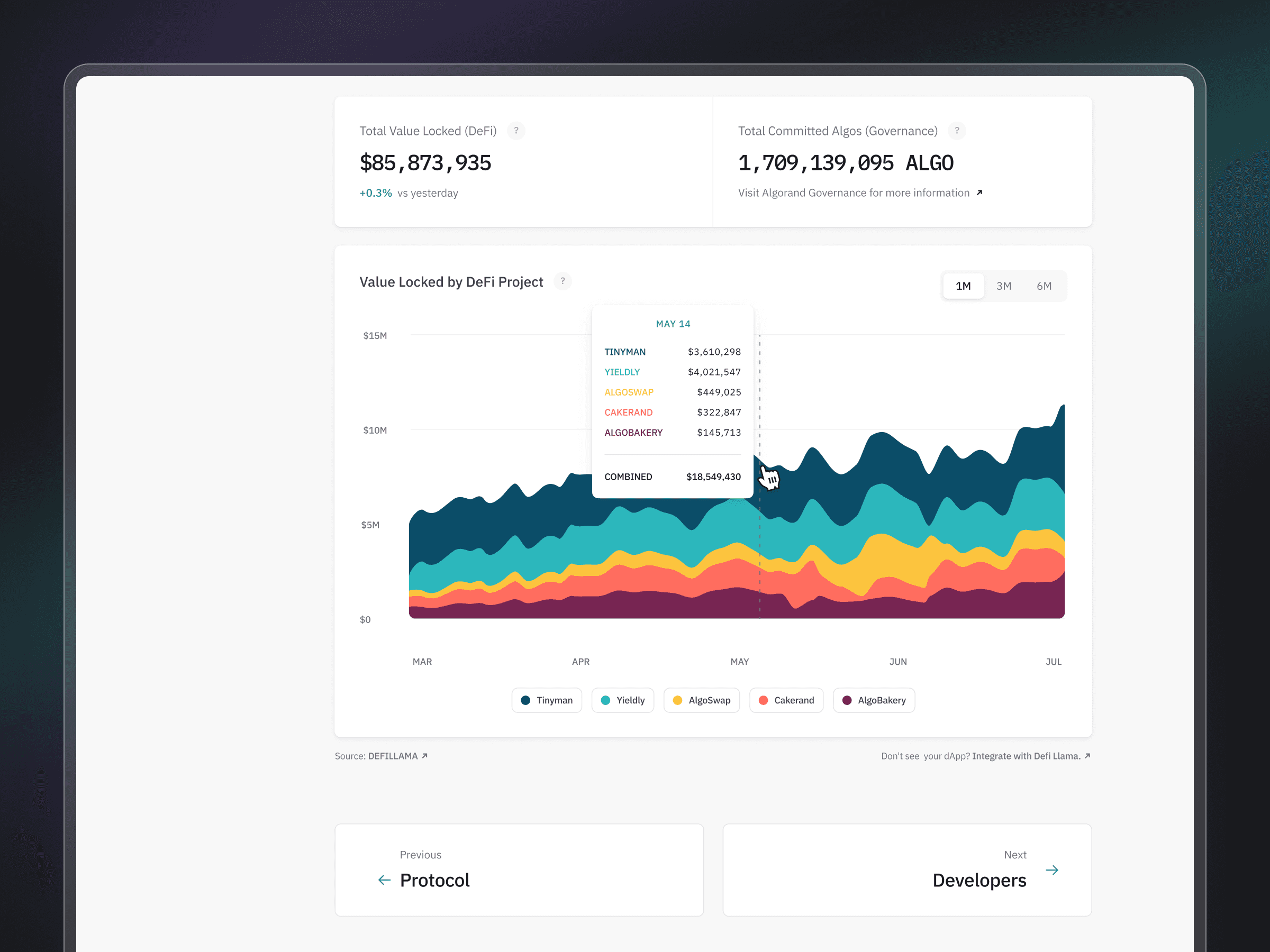
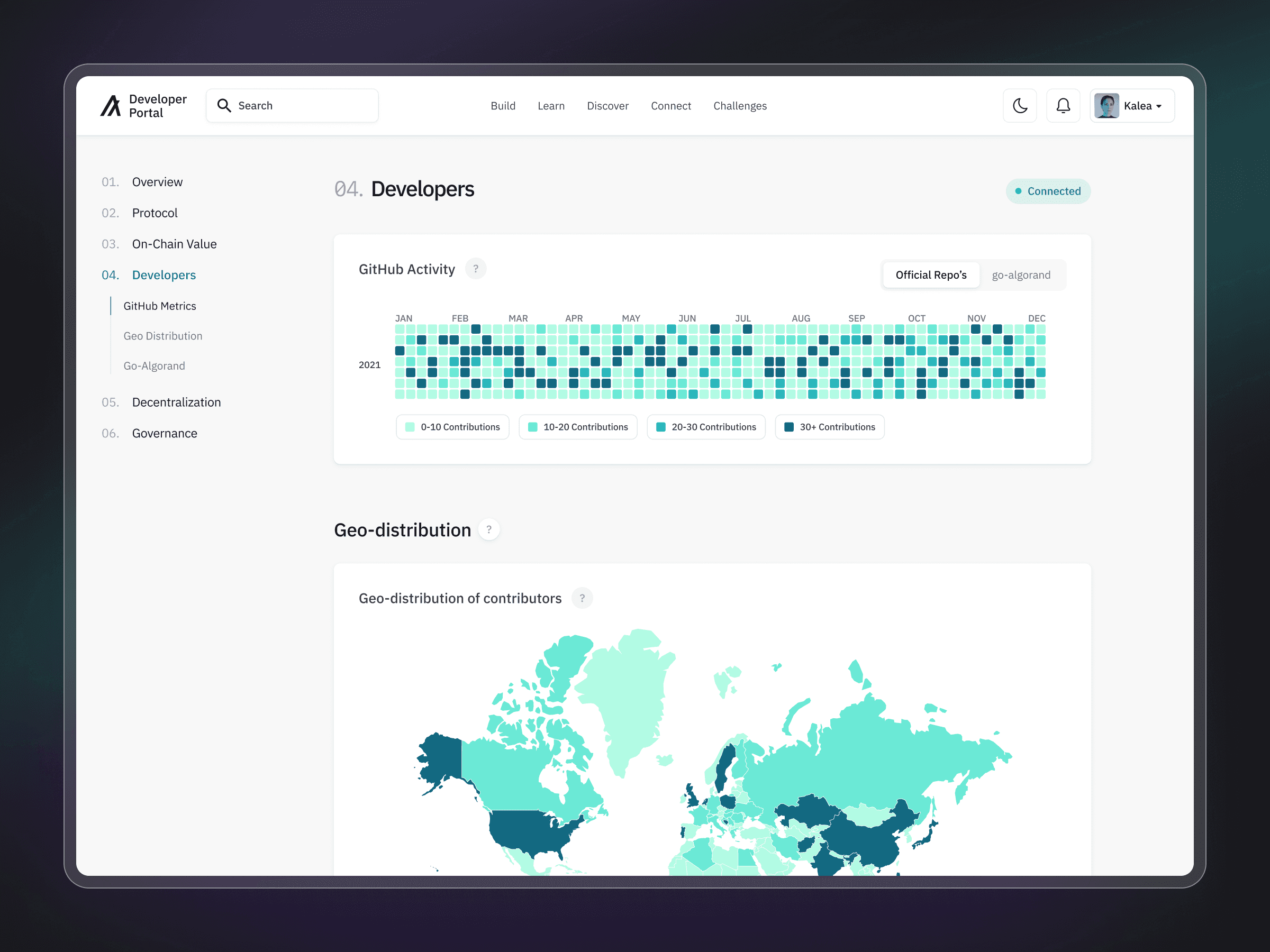
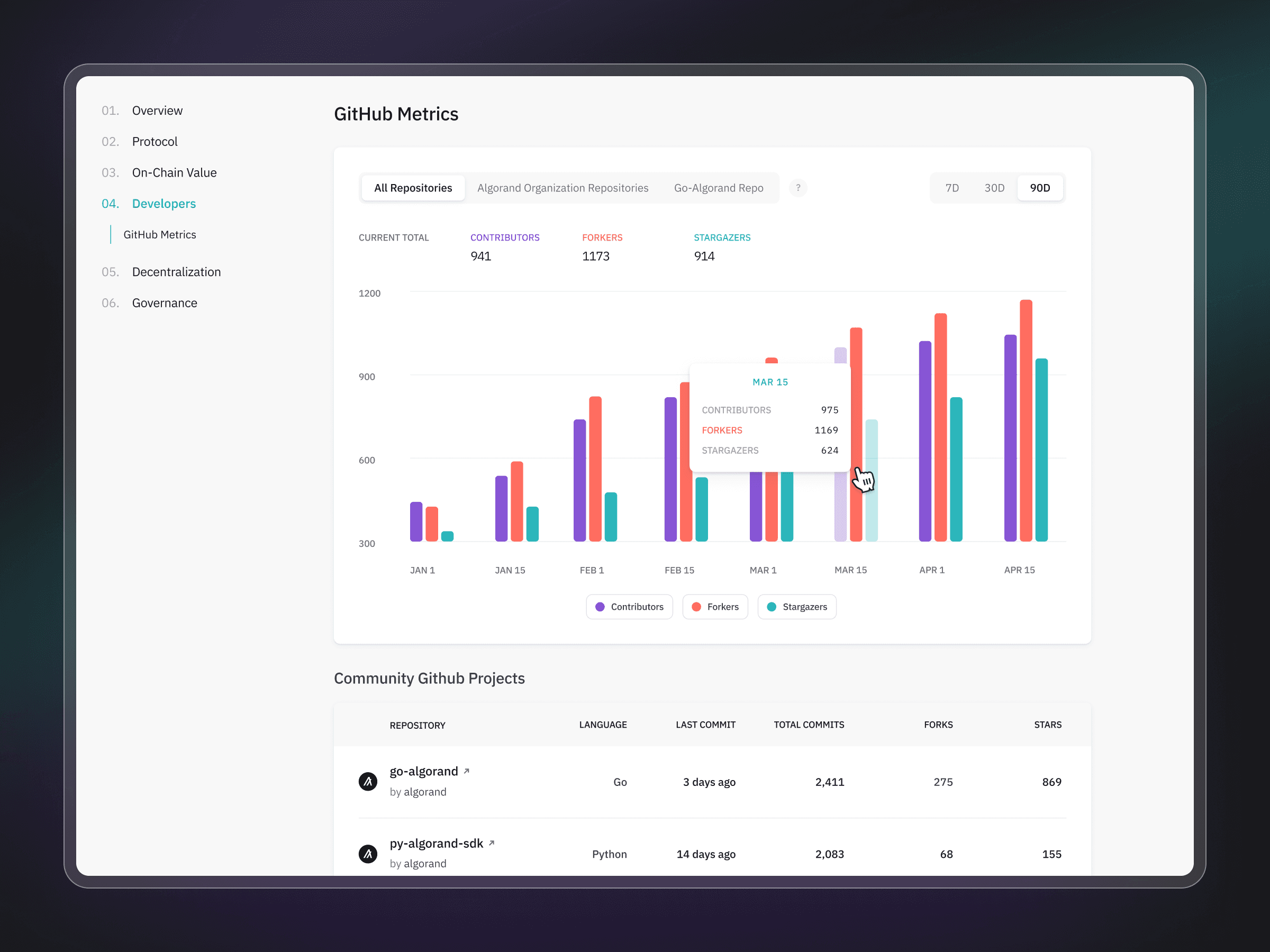
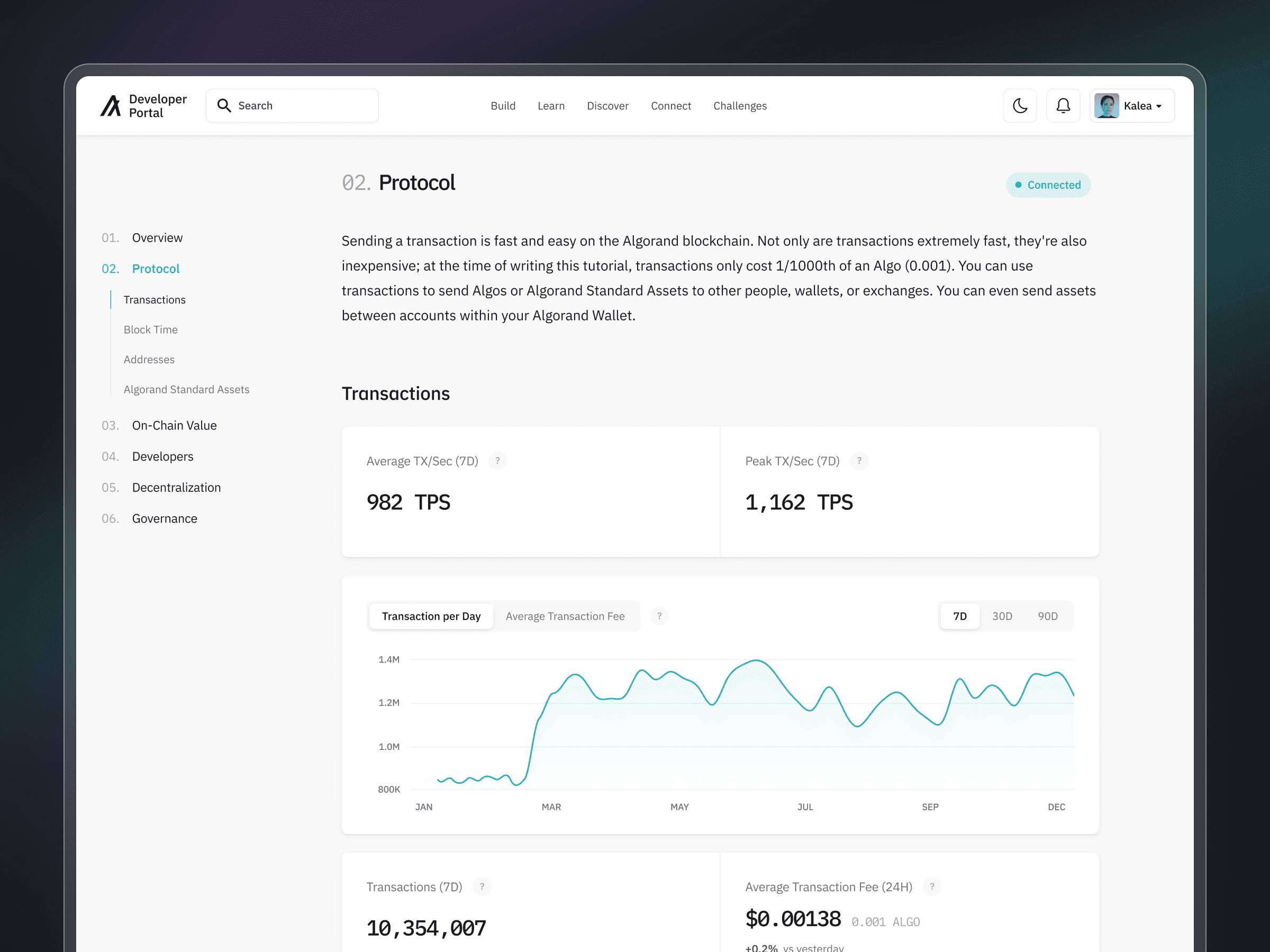
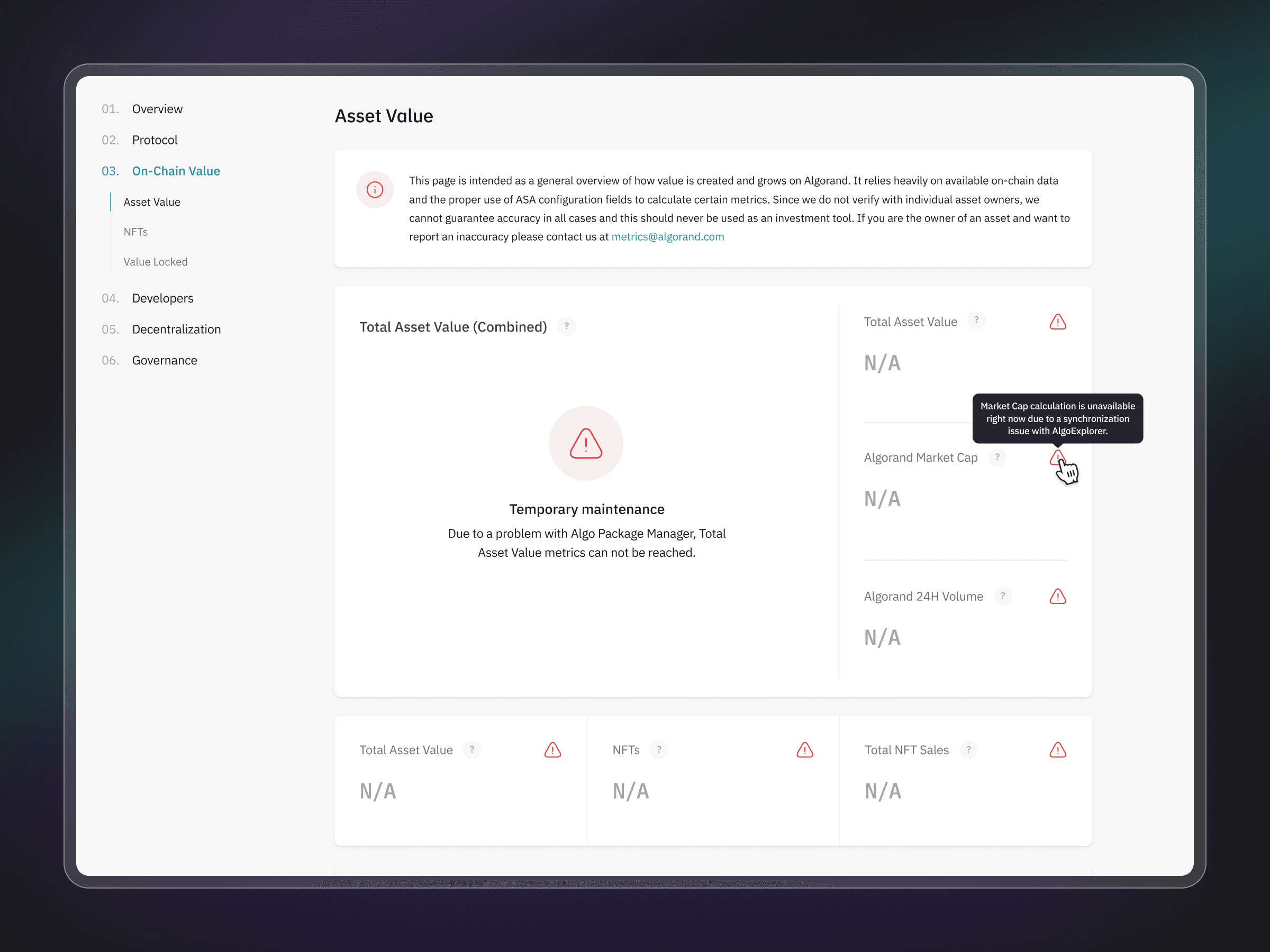
The Algorand Metrics Dashboard serves as the official source for tracking the network’s performance and activity. It provides visibility into key indicators such as transactions per second, daily transaction volume, account growth, developer activity, and total value locked. As the sole designer on the project, I led the end-to-end design process, covering information architecture, data visualization strategy, layout systems, and interaction patterns. The dashboard needed to communicate credibility and clarity while remaining approachable to both technical and non-technical audiences. The challenge was not the absence of data, but the density of it. Blockchain metrics are inherently abstract, time-dependent, and often misinterpreted without context.

The Algorand Metrics Dashboard serves as the official source for tracking the network’s performance and activity. It provides visibility into key indicators such as transactions per second, daily transaction volume, account growth, developer activity, and total value locked. As the sole designer on the project, I led the end-to-end design process, covering information architecture, data visualization strategy, layout systems, and interaction patterns. The dashboard needed to communicate credibility and clarity while remaining approachable to both technical and non-technical audiences. The challenge was not the absence of data, but the density of it. Blockchain metrics are inherently abstract, time-dependent, and often misinterpreted without context.

Design Rationale

The primary goal was to balance depth with readability. Rather than presenting a flat list of charts, the dashboard was structured hierarchically. High-level indicators were surfaced first, followed by more detailed breakdowns for users seeking deeper analysis. Time-based exploration became a core interaction model. Flexible date filters and comparative views allowed users to interpret short-term fluctuations alongside long-term trends. This shifted the experience from static reporting to exploratory analysis. Visual restraint was intentional. Neutral color systems, consistent chart behaviors, and predictable interaction patterns helped reduce cognitive noise. The interface was designed to support interpretation, not decoration.

The primary goal was to balance depth with readability. Rather than presenting a flat list of charts, the dashboard was structured hierarchically. High-level indicators were surfaced first, followed by more detailed breakdowns for users seeking deeper analysis. Time-based exploration became a core interaction model. Flexible date filters and comparative views allowed users to interpret short-term fluctuations alongside long-term trends. This shifted the experience from static reporting to exploratory analysis. Visual restraint was intentional. Neutral color systems, consistent chart behaviors, and predictable interaction patterns helped reduce cognitive noise. The interface was designed to support interpretation, not decoration.

  • More Works

  • More Works

  • More Works

  • More Works

  • More Works

  • More Works

  • More Works

  • More Works

  • More Works

  • More Works

  • More Works

  • More Works

WANT TO SAY HI?

LET'S CHAT

WANT TO SAY HI?

LET'S CHAT

WANT TO SAY HI?

LET'S CHAT