Glitch

Memecoin trading terminal for Solana, Base, Ethereum, and BSC

Unifying on-chain and social signals into a single, execution-focused interface.

Results

✧ Signal Consolidation
Unified on-chain and social signals into a single execution-focused trading interface.
↓ Context Switching
Reduced the need to move across multiple tools during high-volatility trading.
↓ Cognitive Overload
Structured dense real-time data for faster comprehension and decision-making.
↑ Trading Clarity
Prioritized actionable signals over noise to support confident execution.
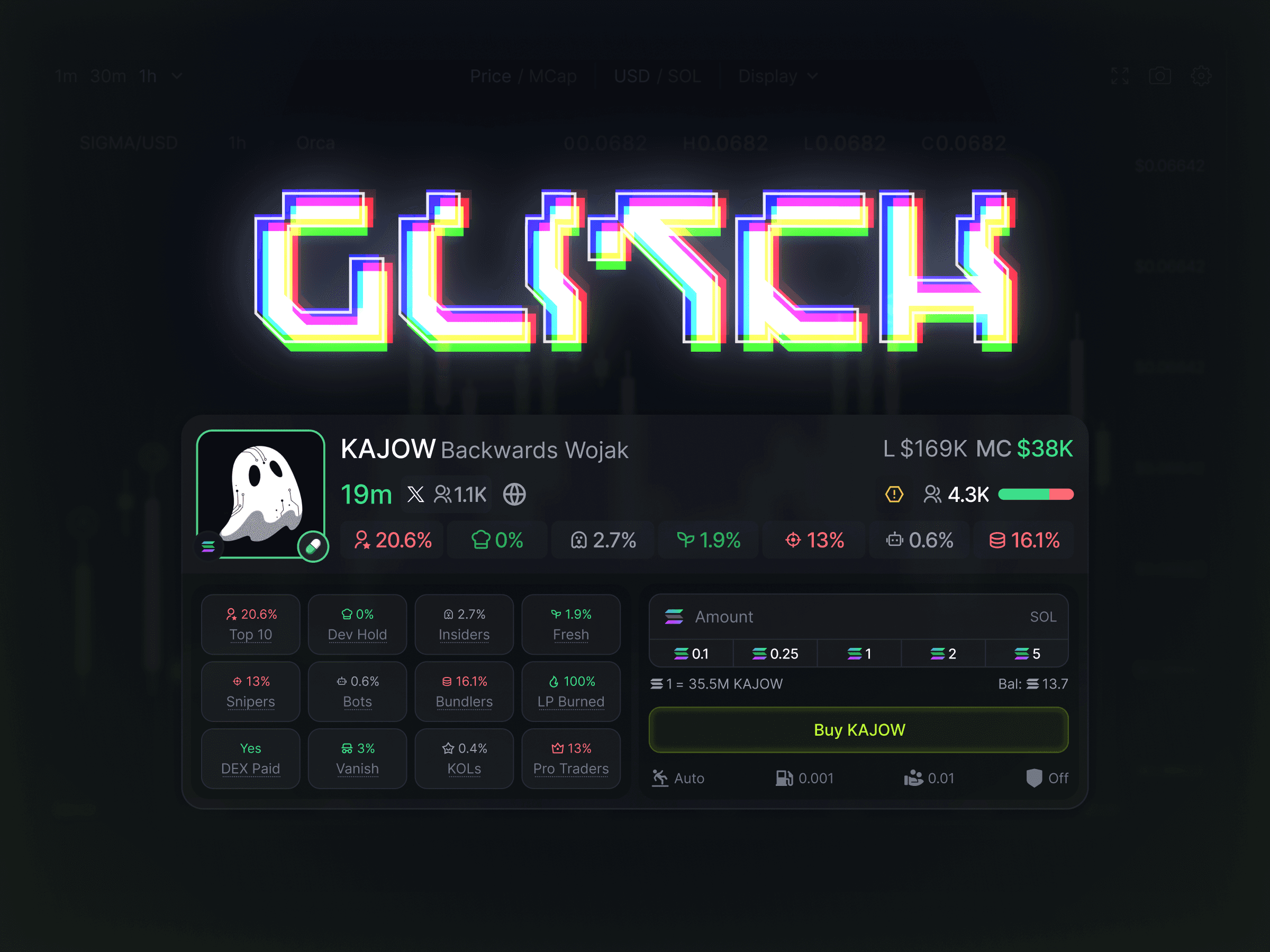
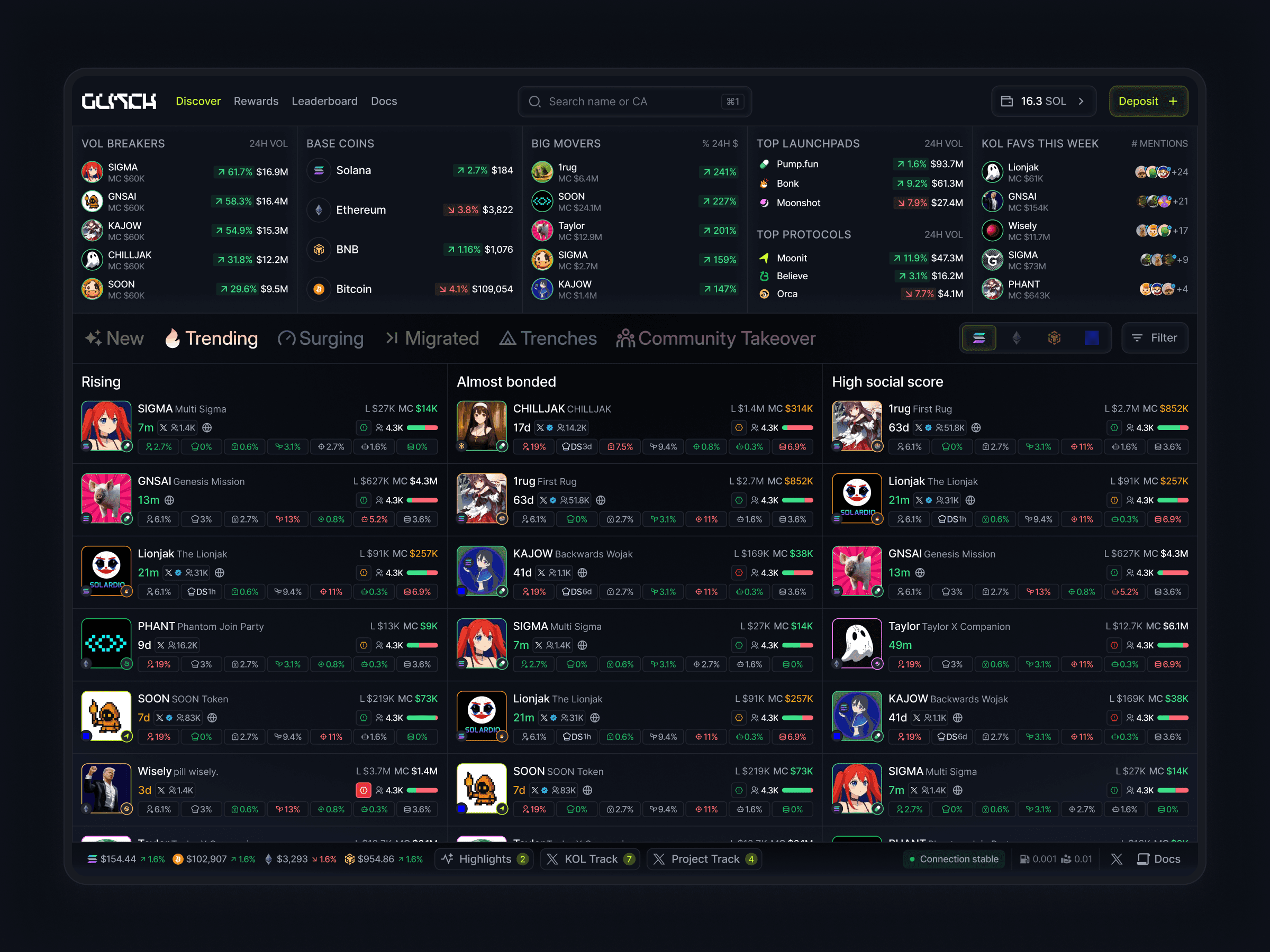
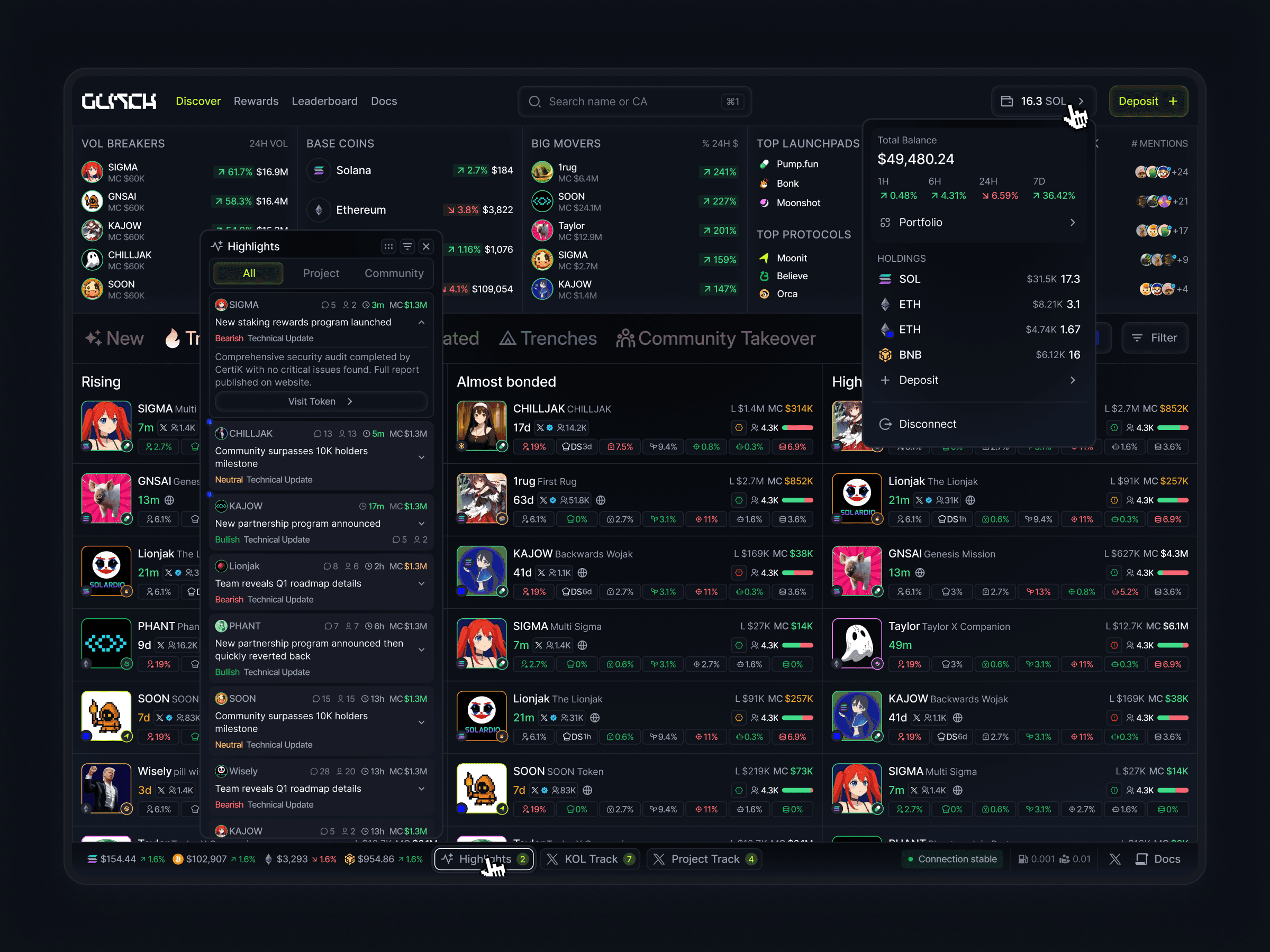
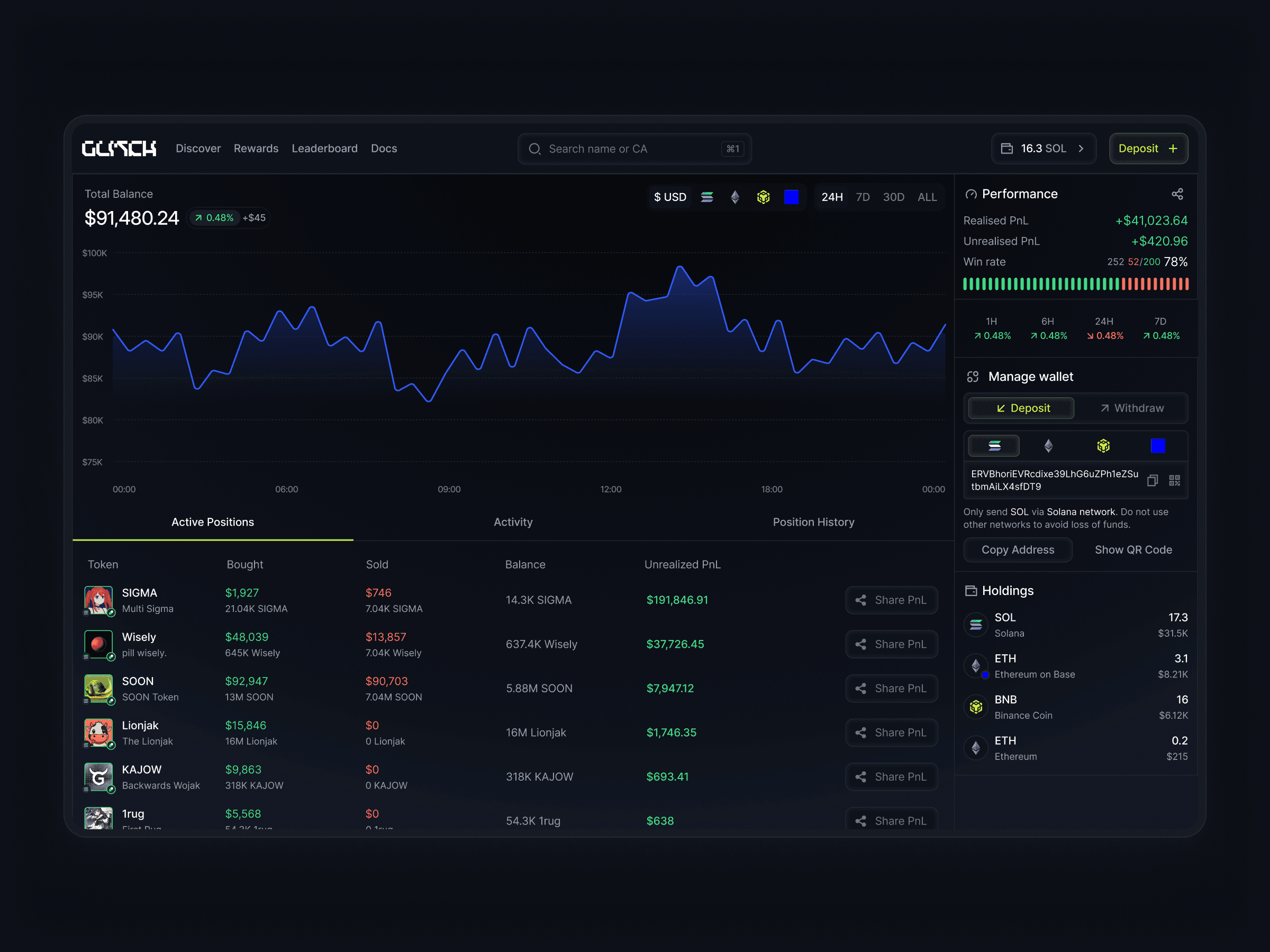
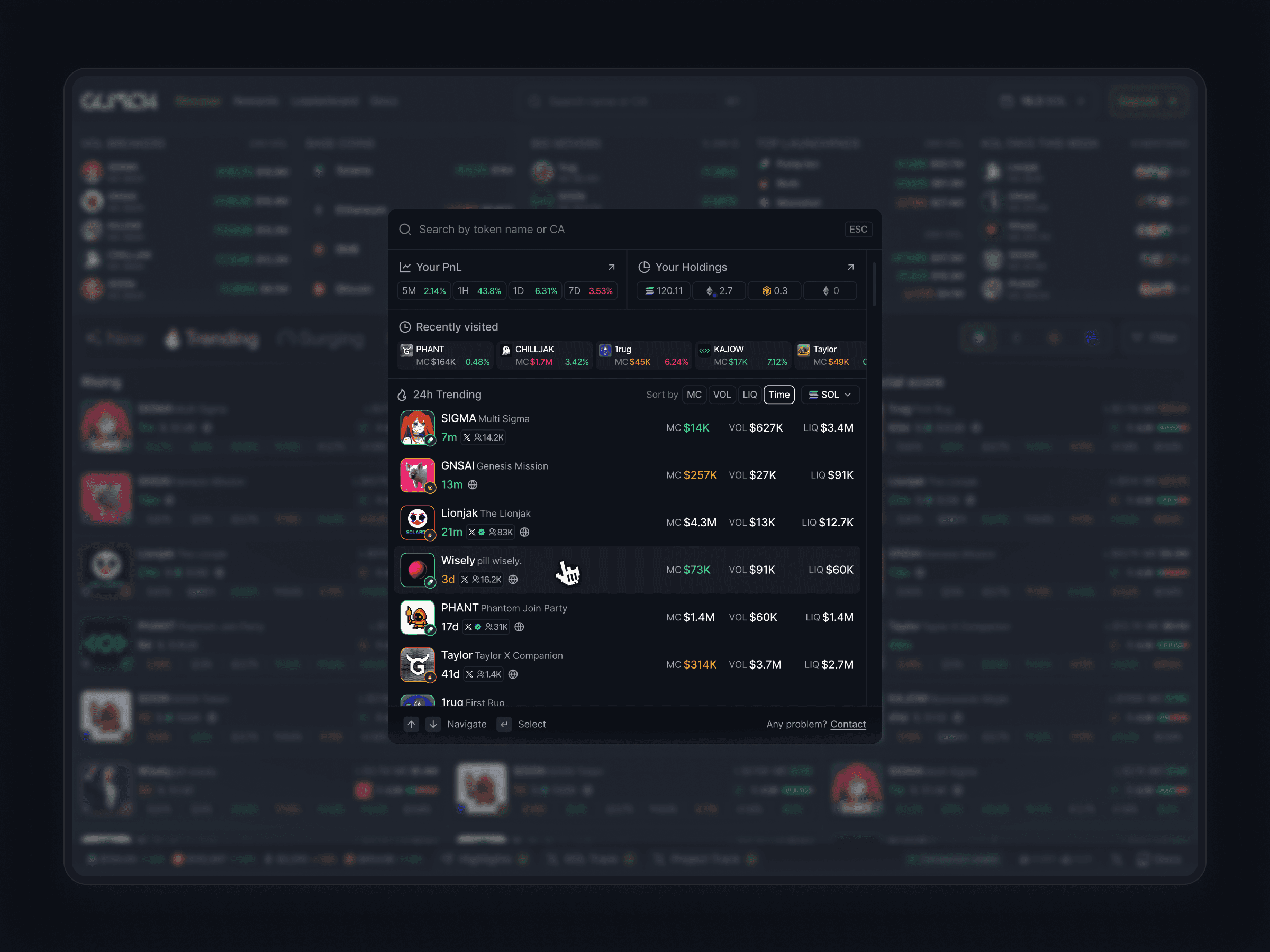
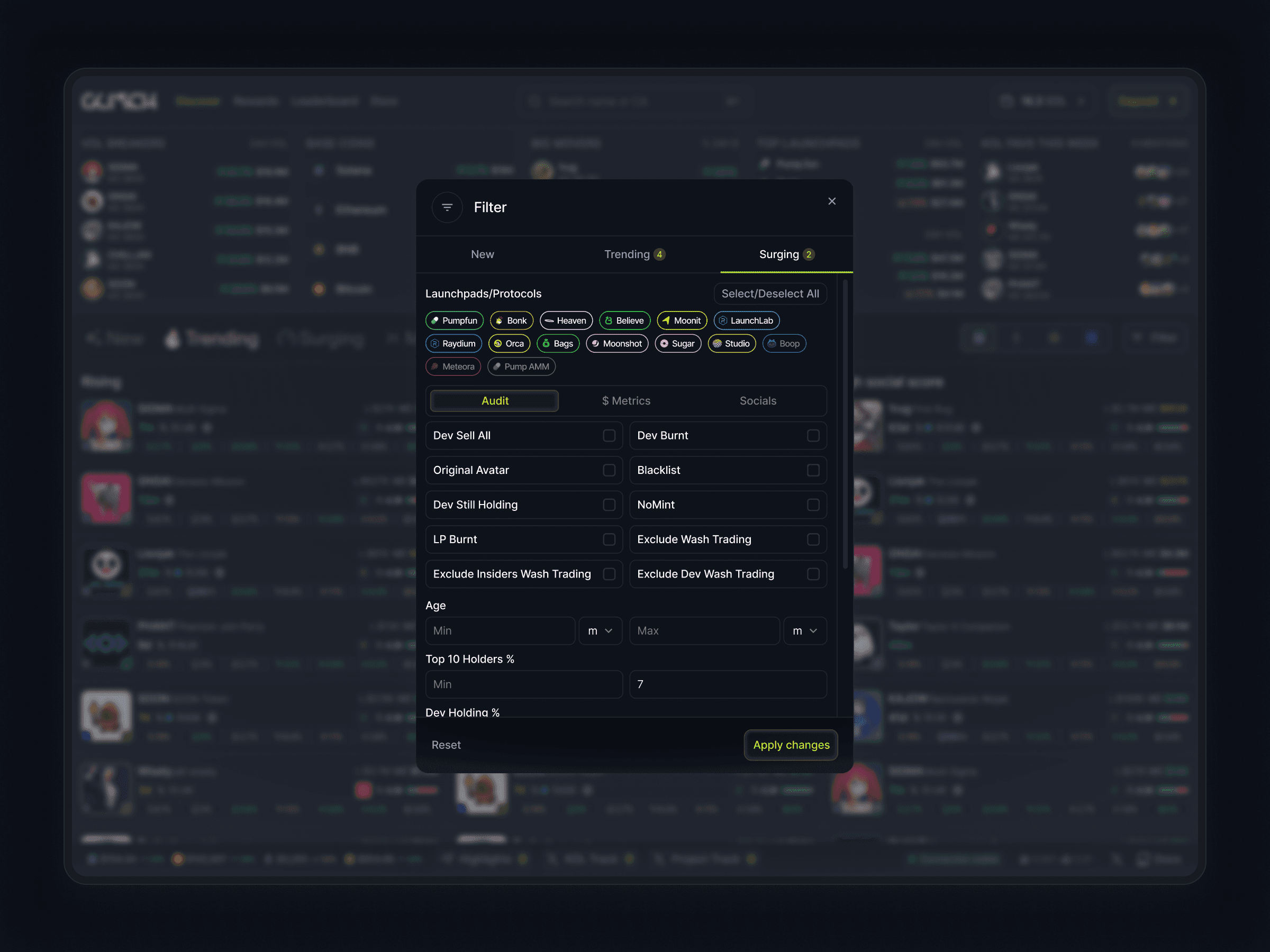
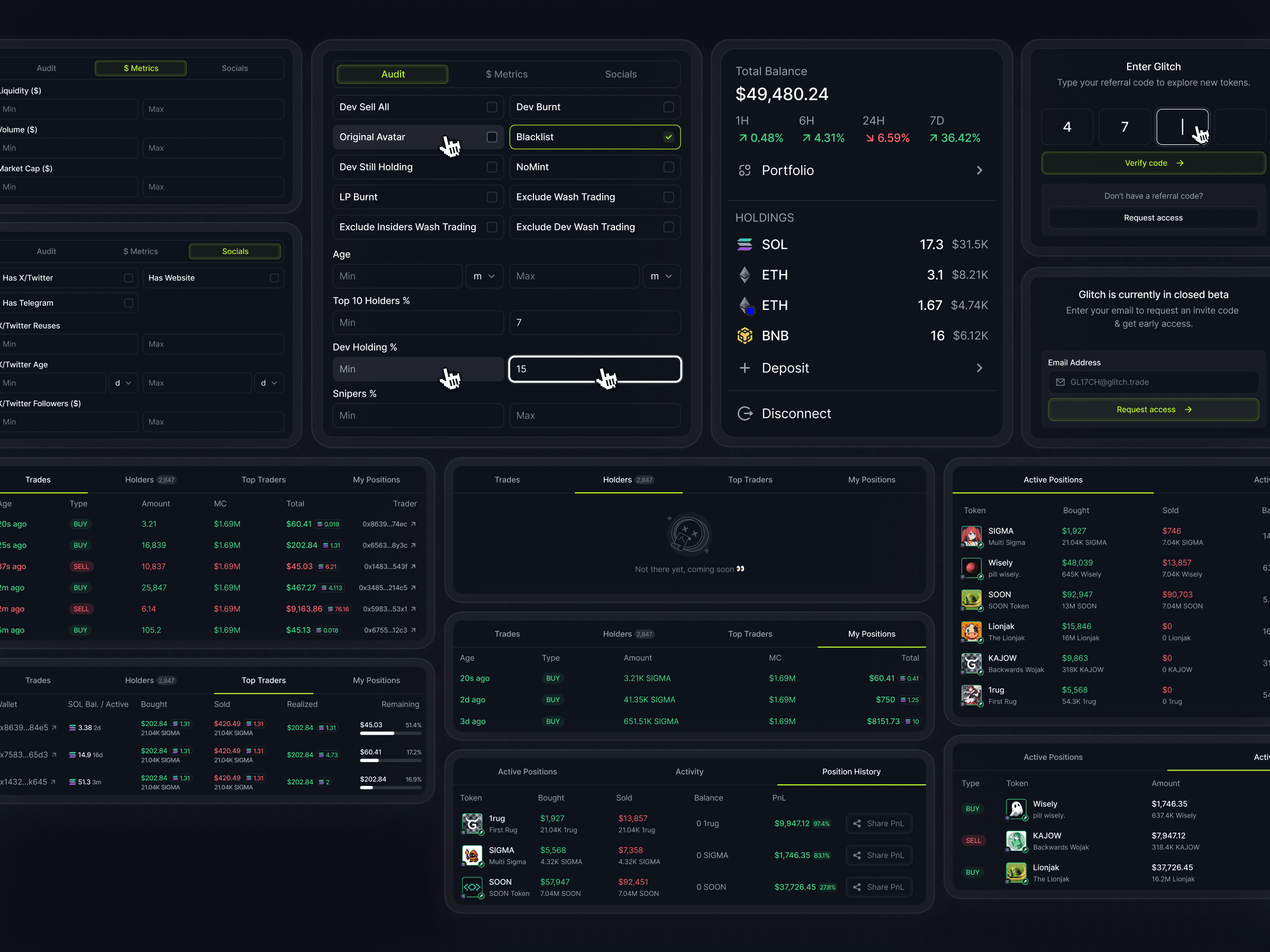
I led the end-to-end product design of Glitch, a real-time trading terminal built for high-frequency memecoin environments. The platform unified on-chain metrics, launchpad activity, liquidity movements, and AI-powered social tracking into a single analytical surface. Rather than treating market data and narrative signals as separate layers, Glitch combined them into a contextual decision system; enabling traders to understand not only what was happening, but why it was happening, and act without losing momentum.

I led the end-to-end product design of Glitch, a real-time trading terminal built for high-frequency memecoin environments. The platform unified on-chain metrics, launchpad activity, liquidity movements, and AI-powered social tracking into a single analytical surface. Rather than treating market data and narrative signals as separate layers, Glitch combined them into a contextual decision system; enabling traders to understand not only what was happening, but why it was happening, and act without losing momentum.

Design Rationale

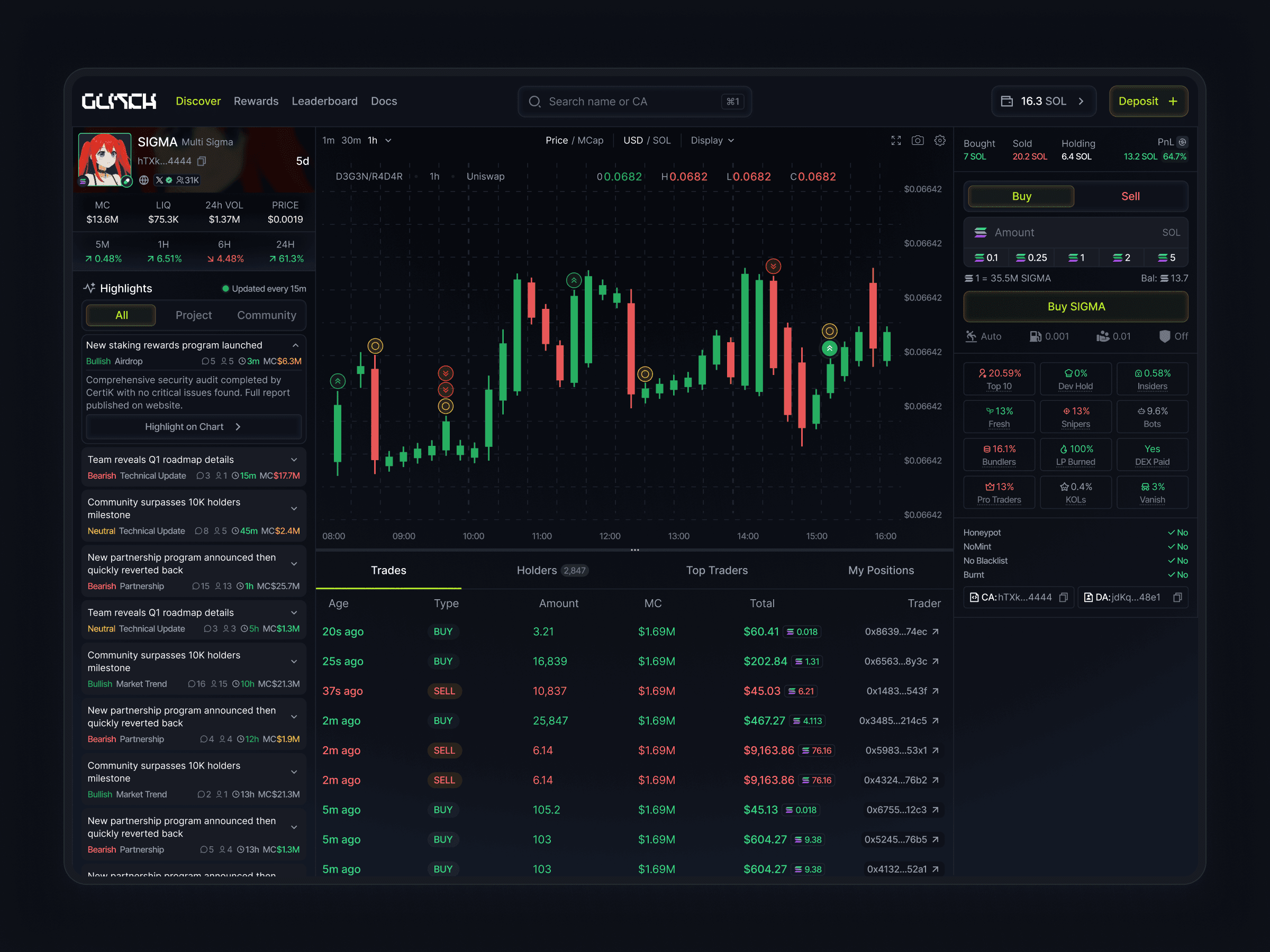
Glitch was designed for high-frequency memecoin traders who were constantly switching between X and trading tools to validate momentum. The core decision was to collapse that loop into a single surface. AI-classified posts and KOL mentions were embedded directly into the price chart and marked as bullish, neutral, or bearish at the moment they occurred. This allowed traders to see narrative shifts in the same context as price movement. The interface intentionally leaned on familiar trading patterns. The goal was not to reinvent the layout, but to reduce friction for users already accustomed to tools like GMGN or DEXTools. Price and execution remained central, social signals were layered onto the chart, and security metrics were positioned for fast scanning. The differentiation came from how data sources were unified, not from visual novelty.

Glitch was designed for high-frequency memecoin traders who were constantly switching between X and trading tools to validate momentum. The core decision was to collapse that loop into a single surface. AI-classified posts and KOL mentions were embedded directly into the price chart and marked as bullish, neutral, or bearish at the moment they occurred. This allowed traders to see narrative shifts in the same context as price movement. The interface intentionally leaned on familiar trading patterns. The goal was not to reinvent the layout, but to reduce friction for users already accustomed to tools like GMGN or DEXTools. Price and execution remained central, social signals were layered onto the chart, and security metrics were positioned for fast scanning. The differentiation came from how data sources were unified, not from visual novelty.

  • More Works

  • More Works

  • More Works

  • More Works

  • More Works

  • More Works

  • More Works

  • More Works

  • More Works

  • More Works

  • More Works

  • More Works

WANT TO SAY HI?

LET'S CHAT

WANT TO SAY HI?

LET'S CHAT

WANT TO SAY HI?

LET'S CHAT