Pera Connect

Connecting Algorand wallets and dApps

Connection layer between Algorand dApps and users with seamless on-chain interactions.

Results

✧ Connection Standards
Created consistent wallet-to-dApp integration patterns for broader adoption.
↓ Approval Ambiguity
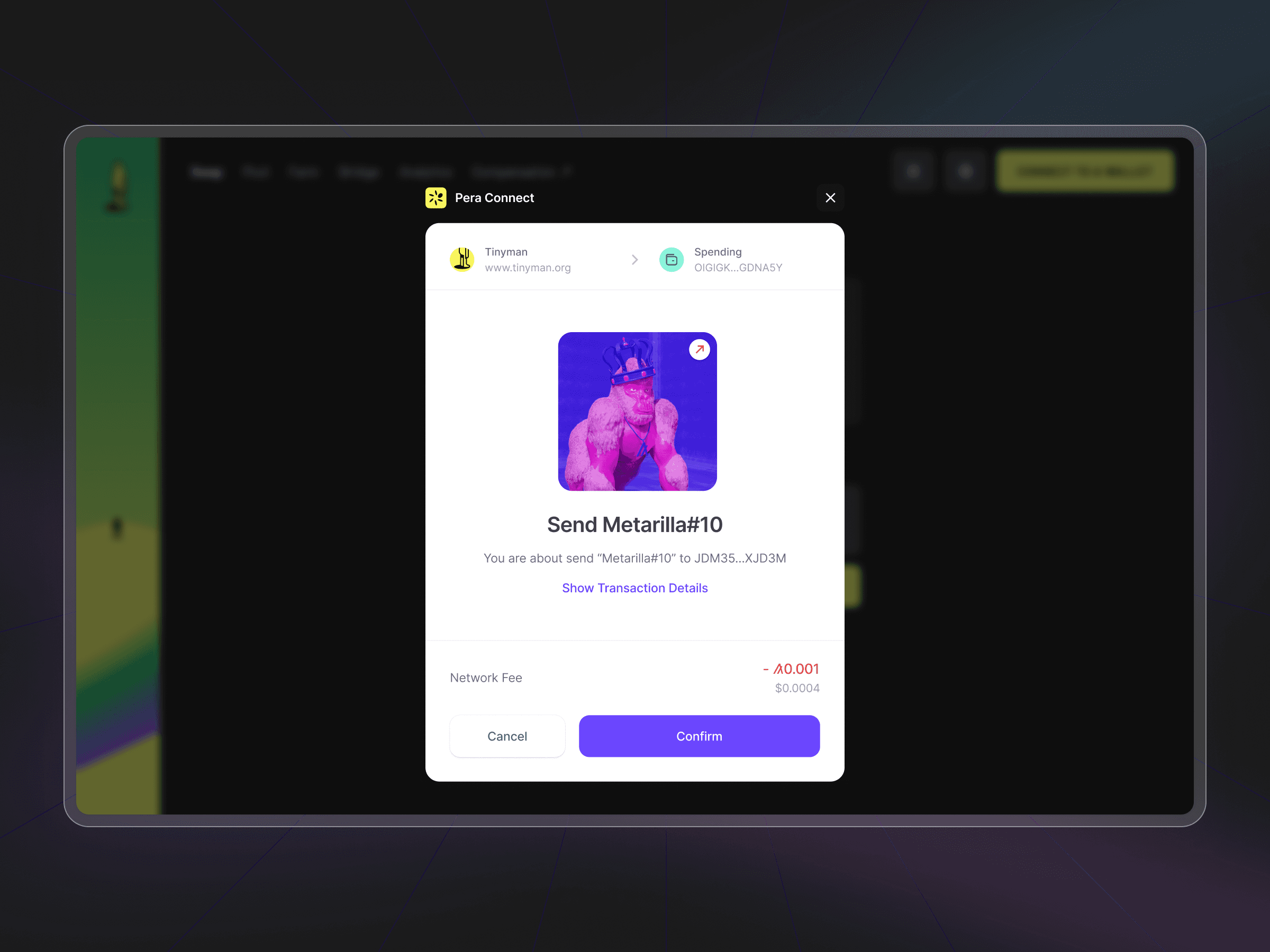
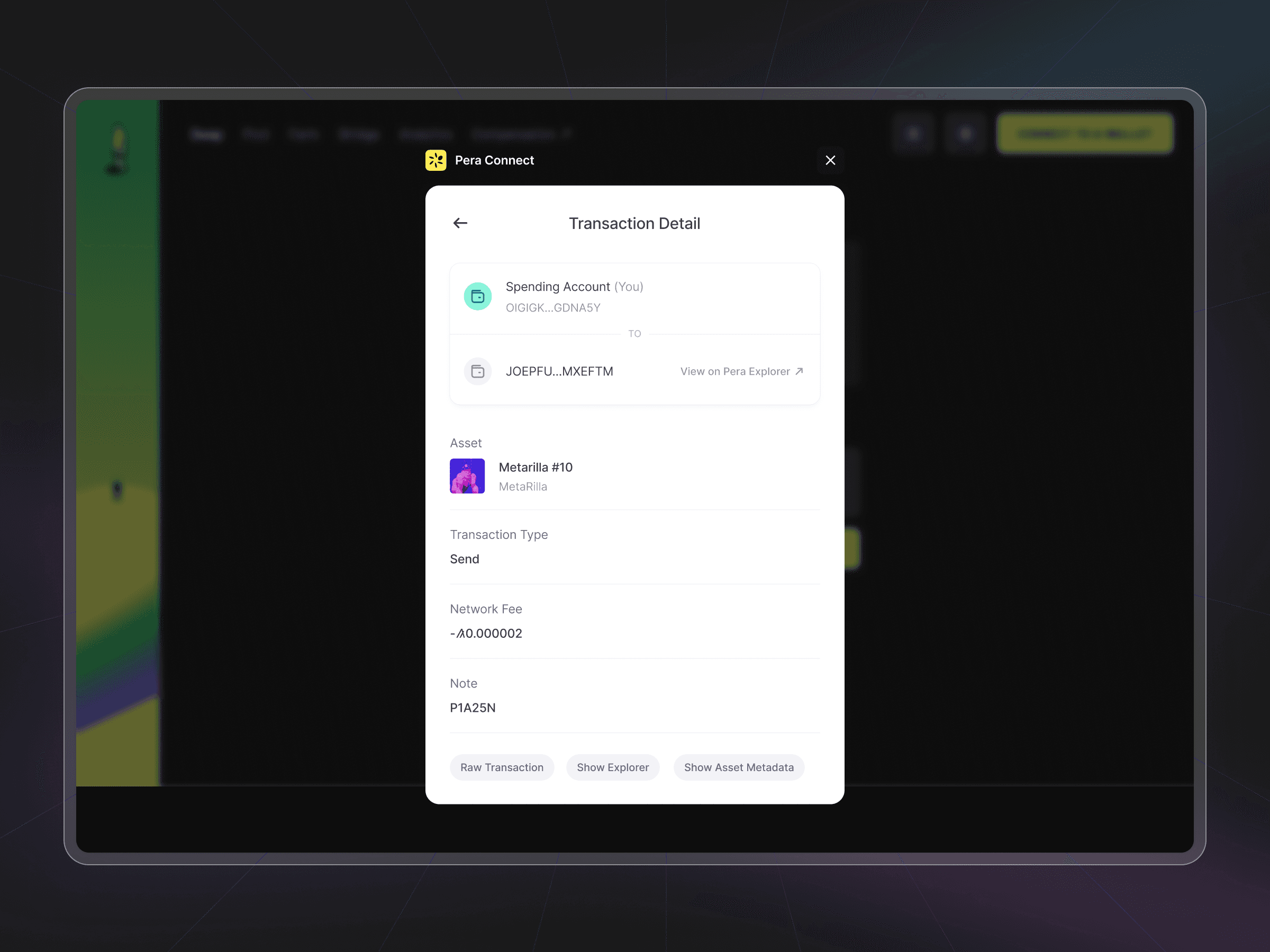
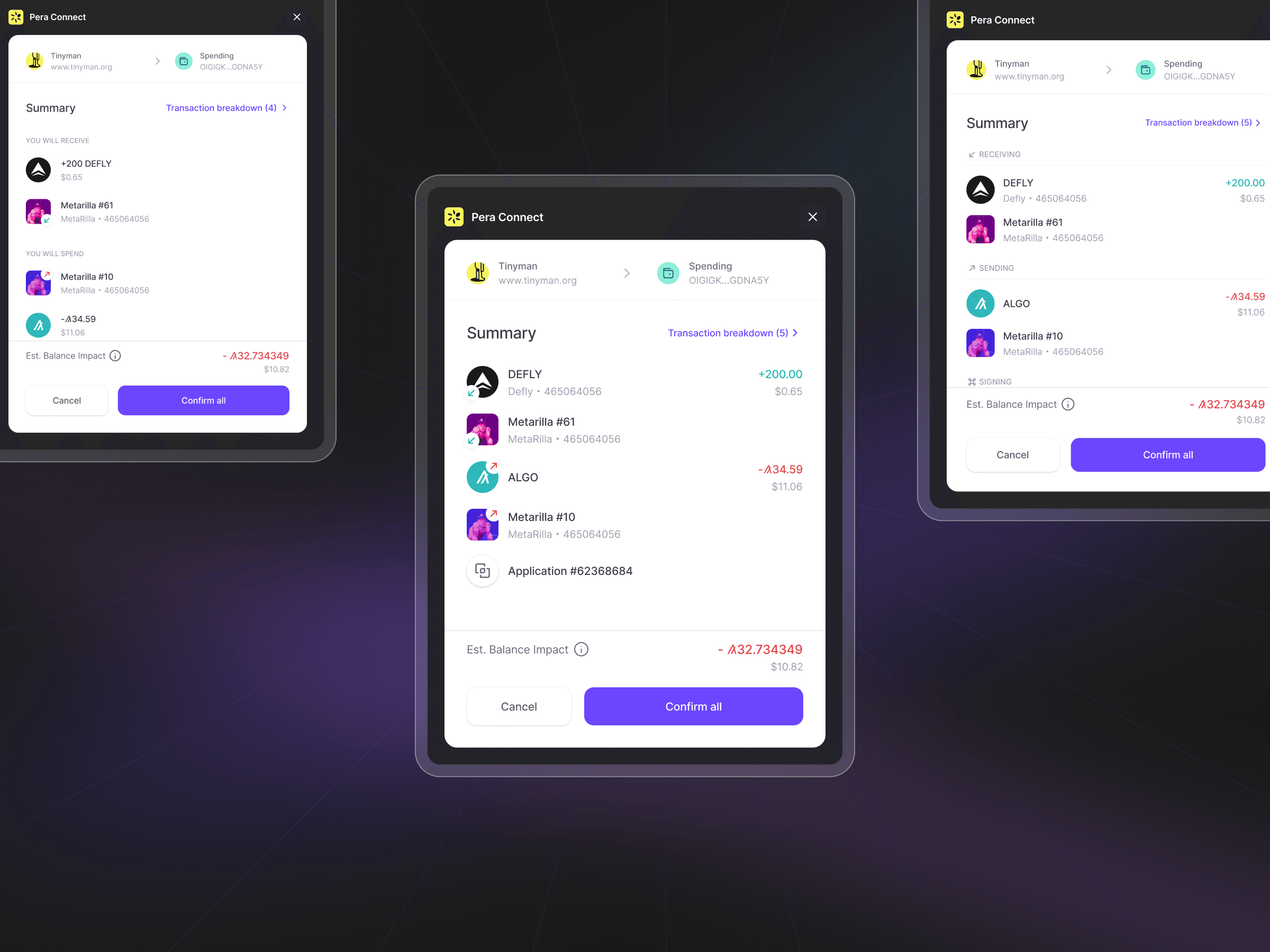
Improved clarity of token, NFT, and smart contract transaction summaries.
↑ User Confidence
Designed transparent real-time feedback during on-chain actions.
↑ Integration Adoption
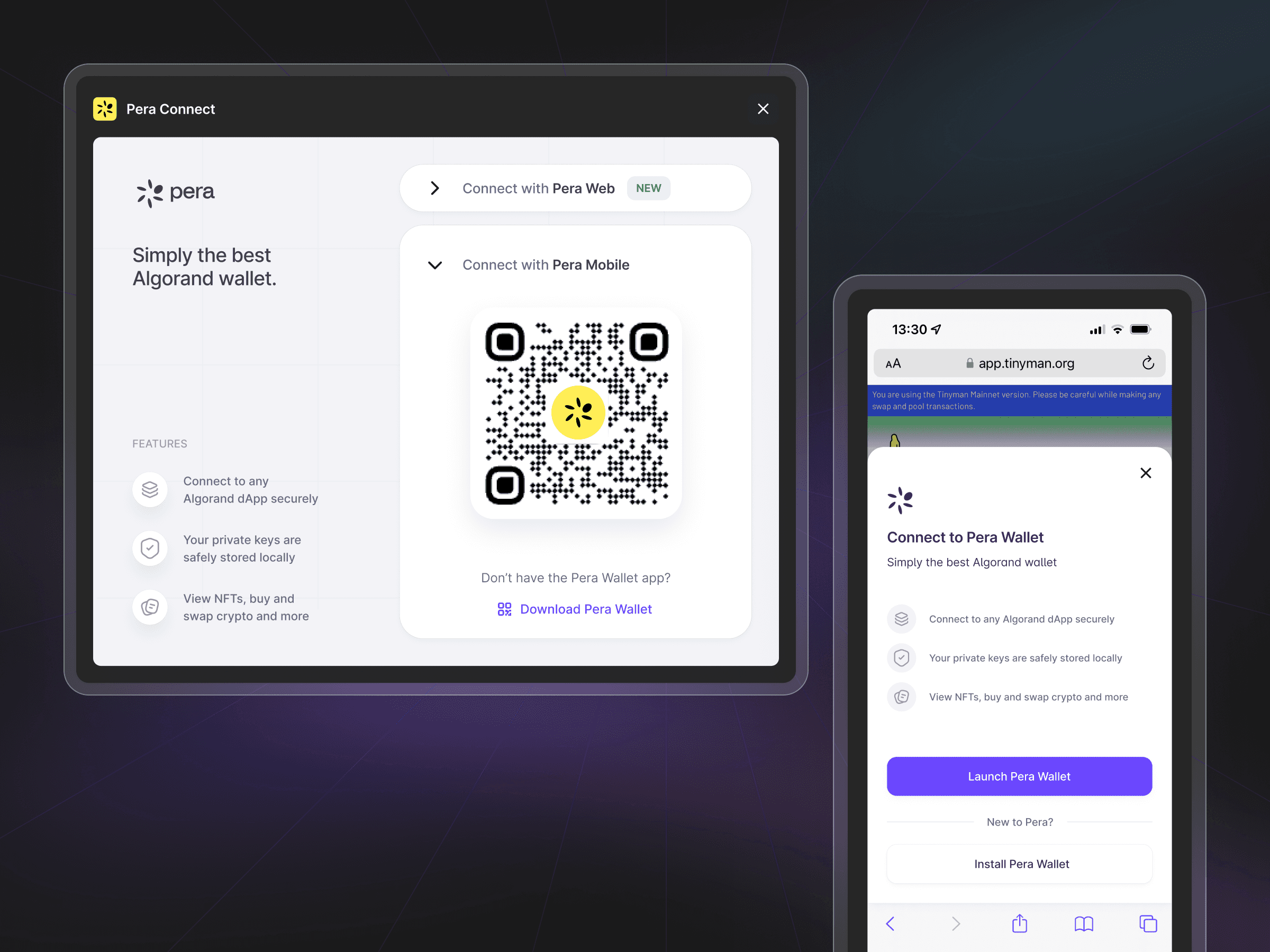
Made connection and permission flows predictable for developers and users.
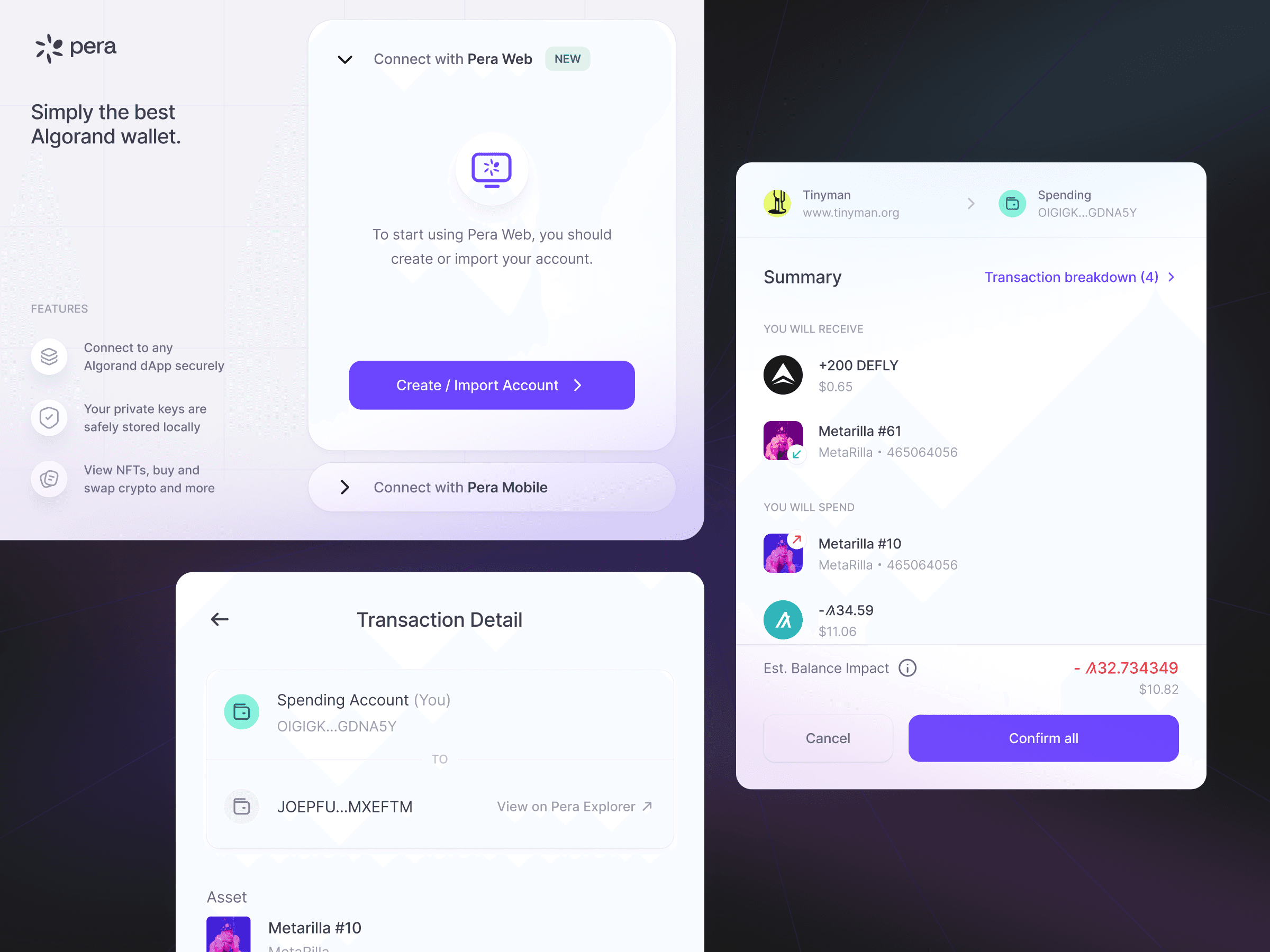
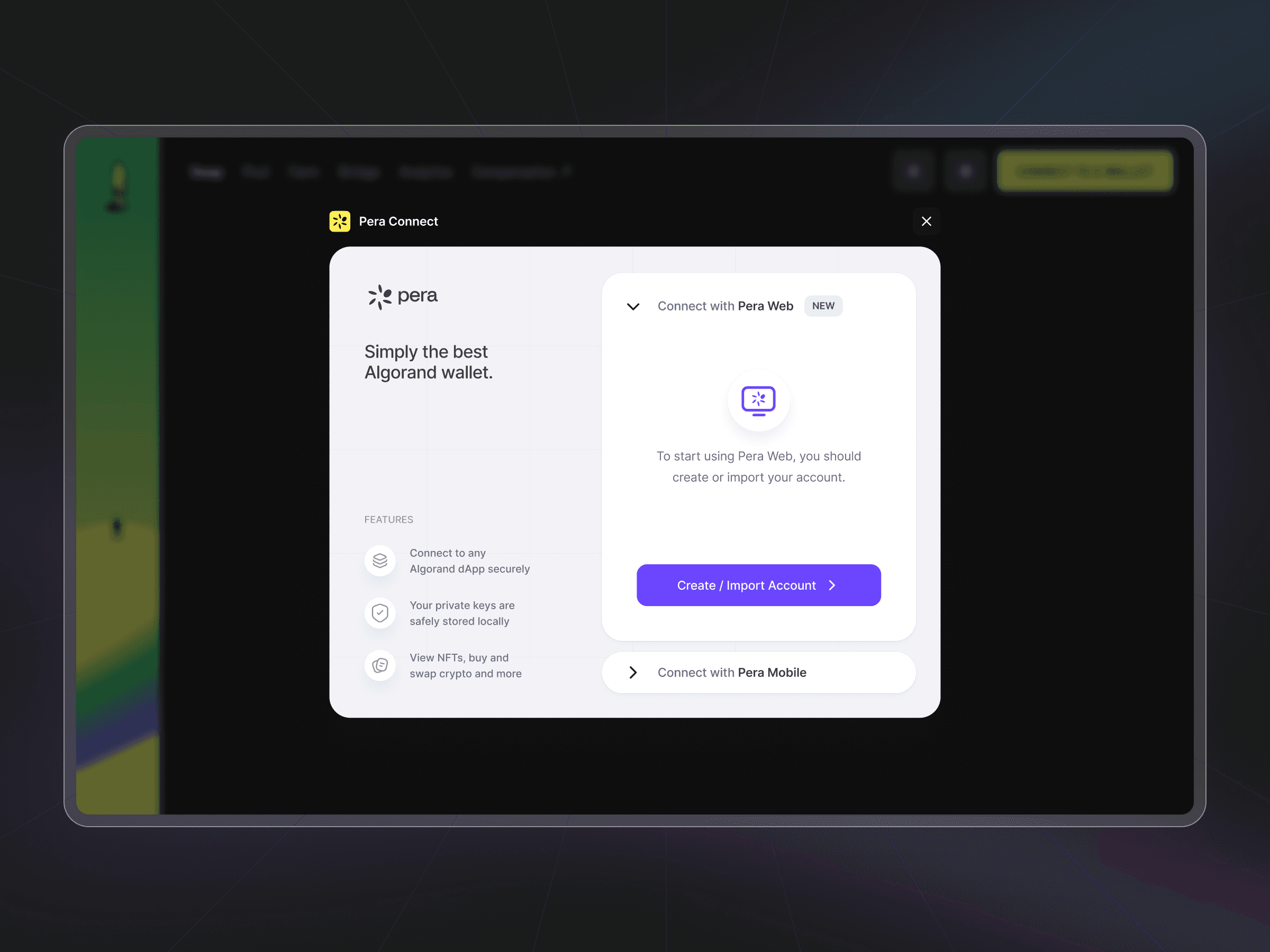
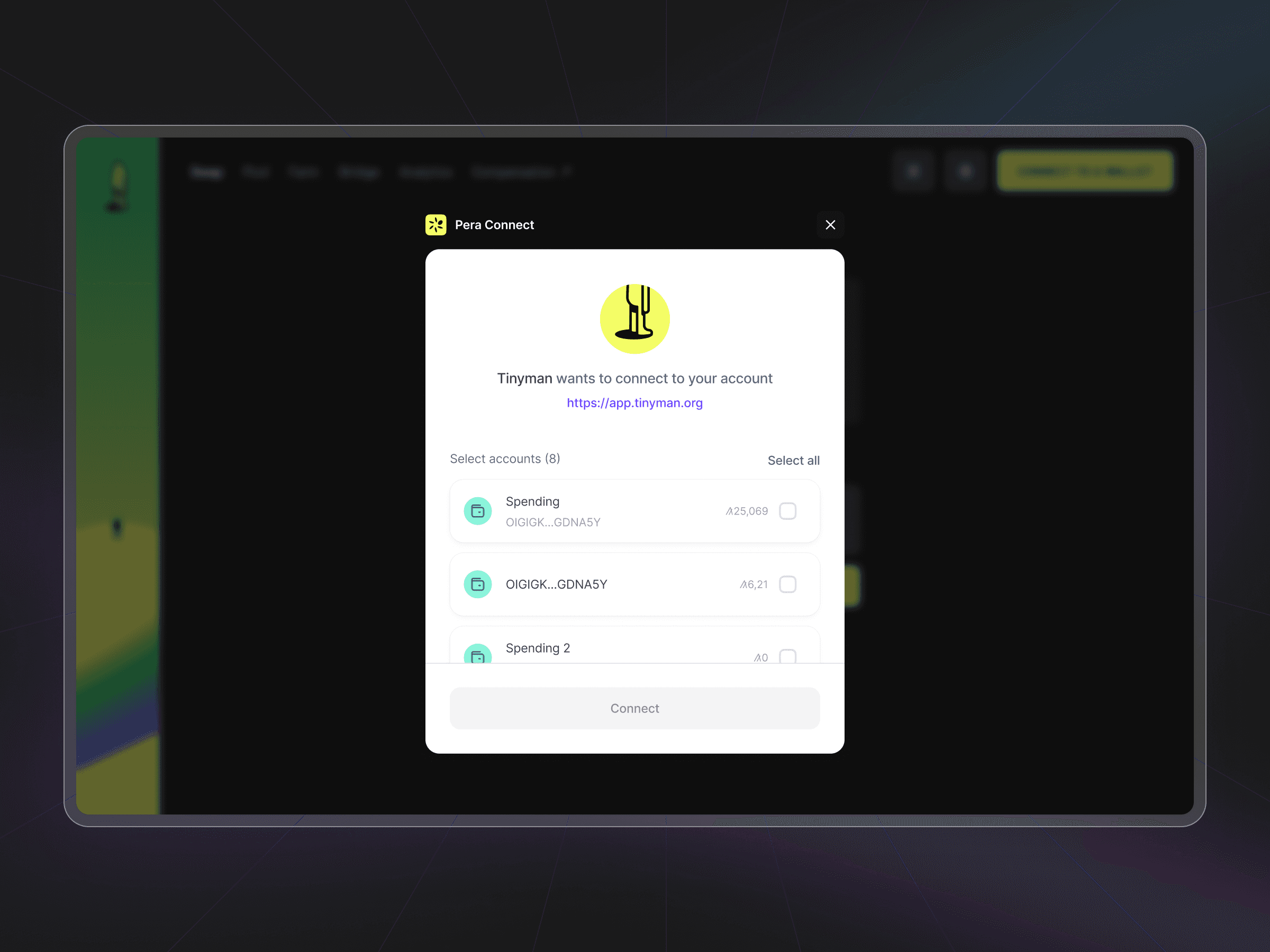
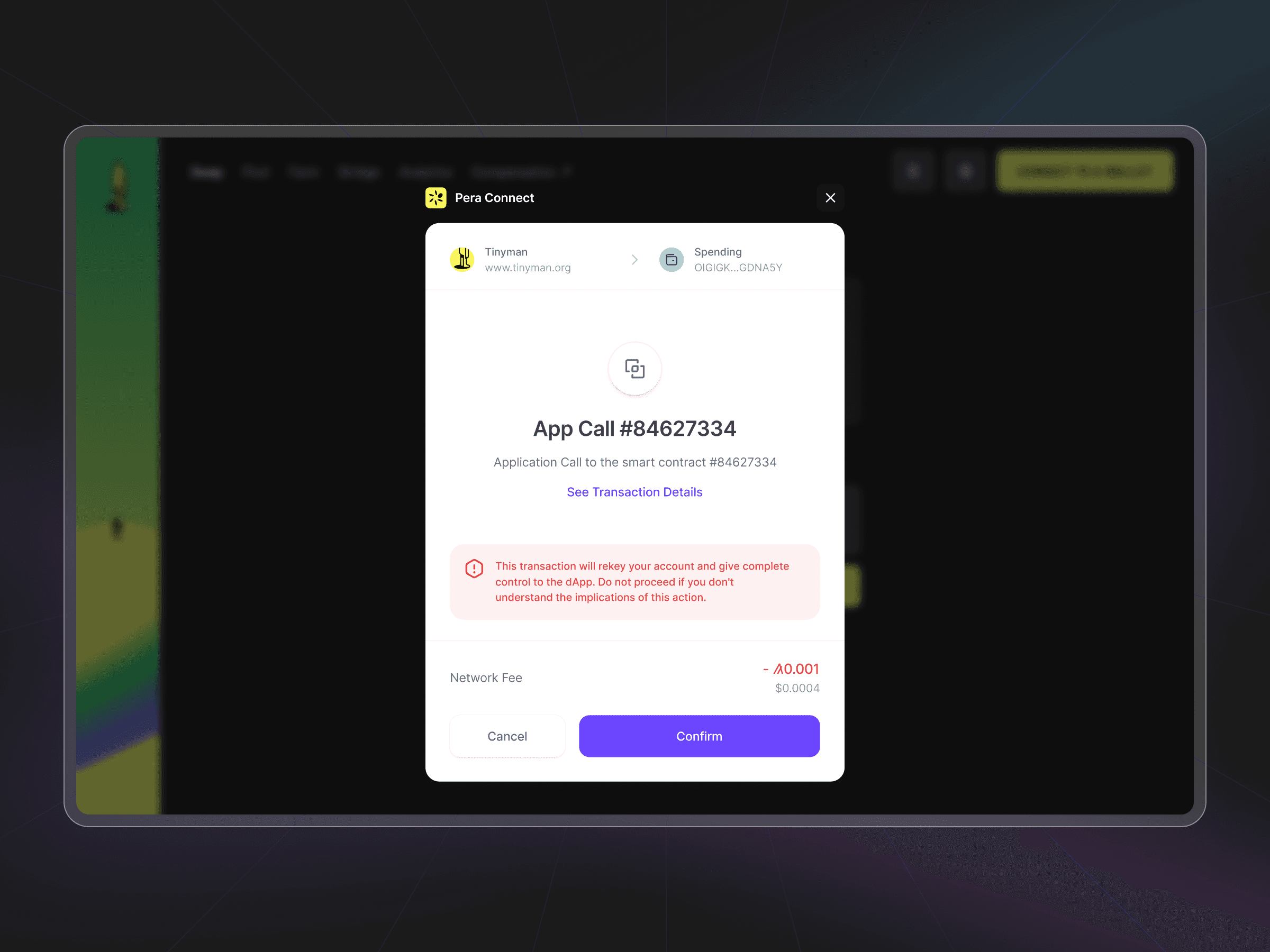
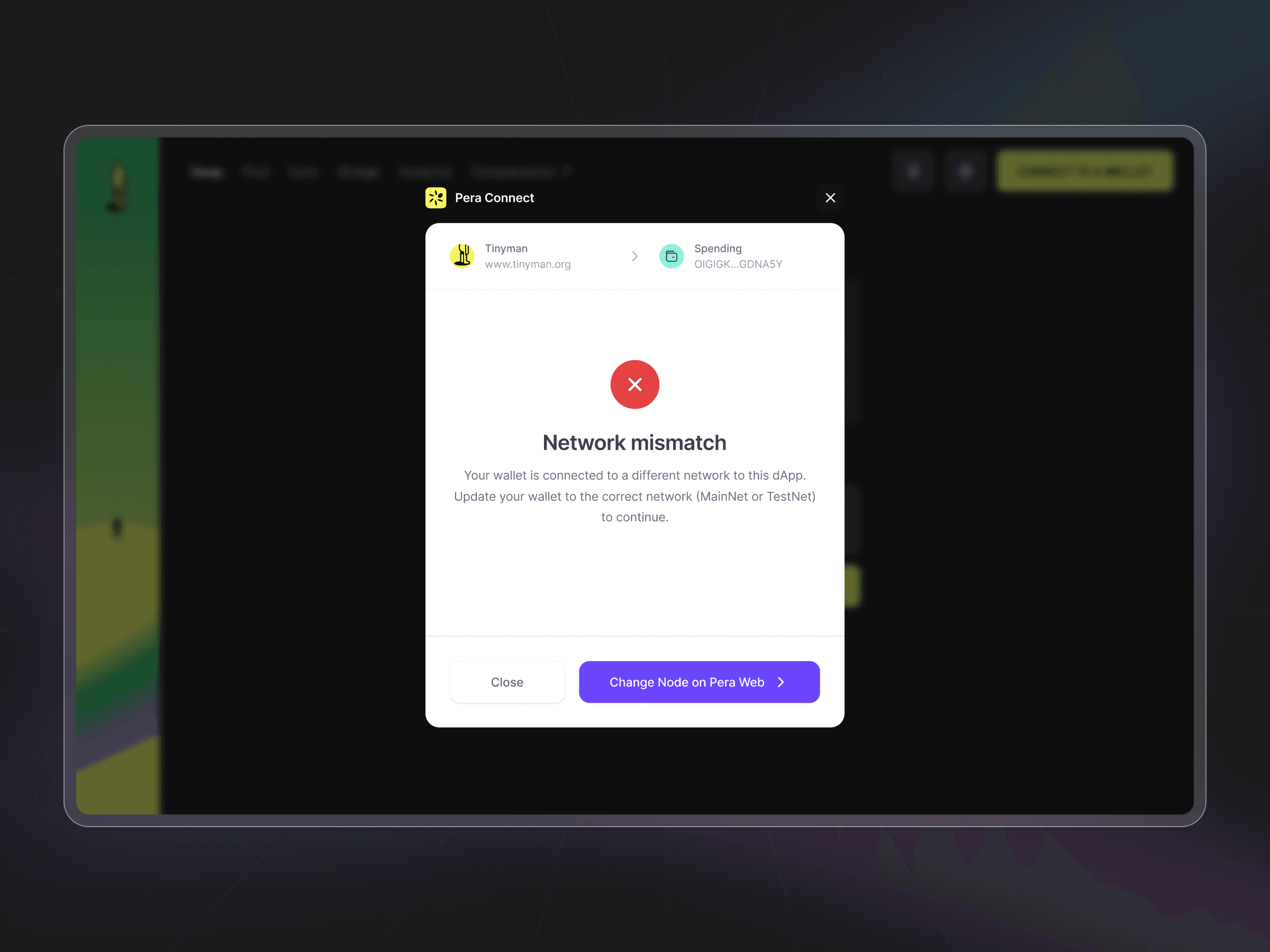
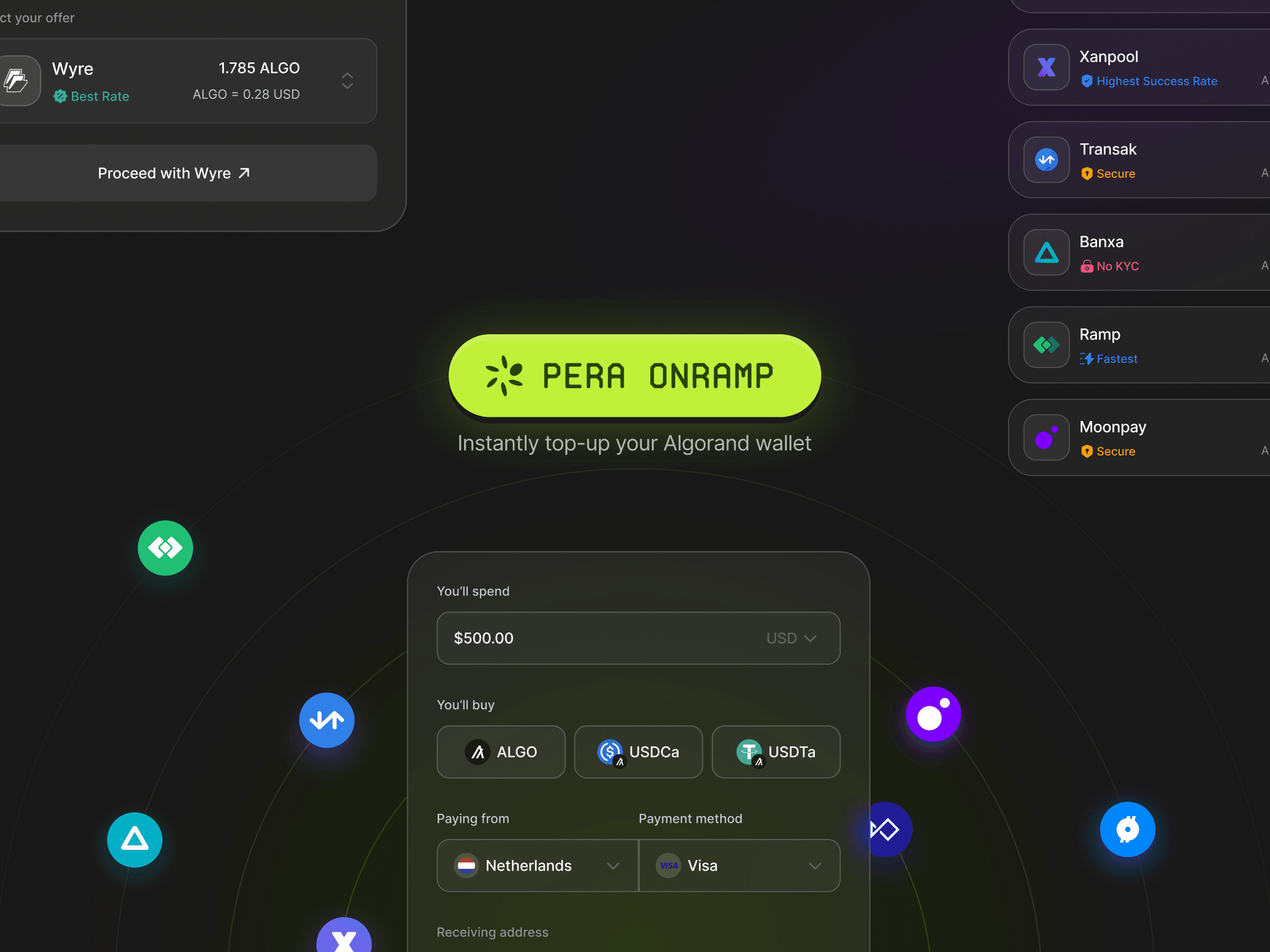
Pera Connect acts as the bridge between Pera Wallet and Algorand-based dApps. It allows users to securely connect their wallet, review transaction details, grant permissions, and approve on-chain actions. The product needed to support a wide range of use cases, from simple wallet authentication to complex token swaps and NFT interactions. I focused on designing the critical connection and approval flows, ensuring clarity during high-stakes interaction moments.

Pera Connect acts as the bridge between Pera Wallet and Algorand-based dApps. It allows users to securely connect their wallet, review transaction details, grant permissions, and approve on-chain actions. The product needed to support a wide range of use cases, from simple wallet authentication to complex token swaps and NFT interactions. I focused on designing the critical connection and approval flows, ensuring clarity during high-stakes interaction moments.

Design Rationale

Wallet connection and transaction approval flows are moments of high cognitive load. Users must understand what they are signing, what assets are involved, and what permissions are being granted. The interface was structured to prioritize transparency. Transaction summaries clearly surfaced token amounts, contract interactions, fees, and potential risks. Permission scopes were made explicit to avoid ambiguity. Real-time feedback during transaction processing was essential. Status indicators and confirmation states were designed to reduce anxiety and prevent duplicate submissions. For developers, consistency mattered. Standardized patterns ensured that integration felt predictable across different dApps while maintaining security and usability.

Wallet connection and transaction approval flows are moments of high cognitive load. Users must understand what they are signing, what assets are involved, and what permissions are being granted. The interface was structured to prioritize transparency. Transaction summaries clearly surfaced token amounts, contract interactions, fees, and potential risks. Permission scopes were made explicit to avoid ambiguity. Real-time feedback during transaction processing was essential. Status indicators and confirmation states were designed to reduce anxiety and prevent duplicate submissions. For developers, consistency mattered. Standardized patterns ensured that integration felt predictable across different dApps while maintaining security and usability.

  • More Works

  • More Works

  • More Works

  • More Works

  • More Works

  • More Works

  • More Works

  • More Works

  • More Works

  • More Works

  • More Works

  • More Works

WANT TO SAY HI?

LET'S CHAT

WANT TO SAY HI?

LET'S CHAT

WANT TO SAY HI?

LET'S CHAT